I Finally Cracked Balcony Wall Decor (And Yes, It Involves Eye-Level Lighting And Fewer Random Hooks)
Balcony wall decor can completely change a small outdoor space, especially when you are renting, dealing with strong wind, or simply trying to avoid drilling holes into your walls. The trick is to choose decor that looks good while also handling sunlight, rain, limited space, and everyday outdoor conditions.
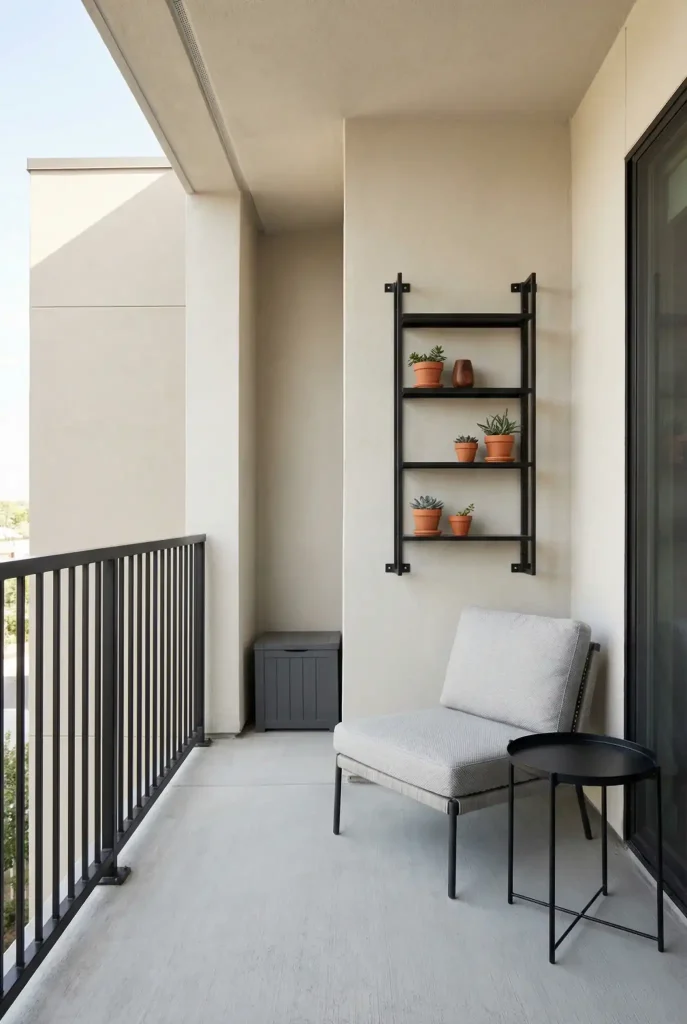
A balcony wall is often the most overlooked part of the space. Floors usually get the furniture, plants, and rugs, while the vertical space remains empty. That is a missed opportunity because the walls can provide privacy, storage, greenery, lighting, and personality without taking away valuable floor space.
The best balcony decorating ideas are not about covering every empty spot with decorations. They are about making smart use of vertical space while keeping everything safe, practical, and easy to maintain. Renters also need removable solutions that do not leave permanent damage behind.
Supplies Quick Checklist
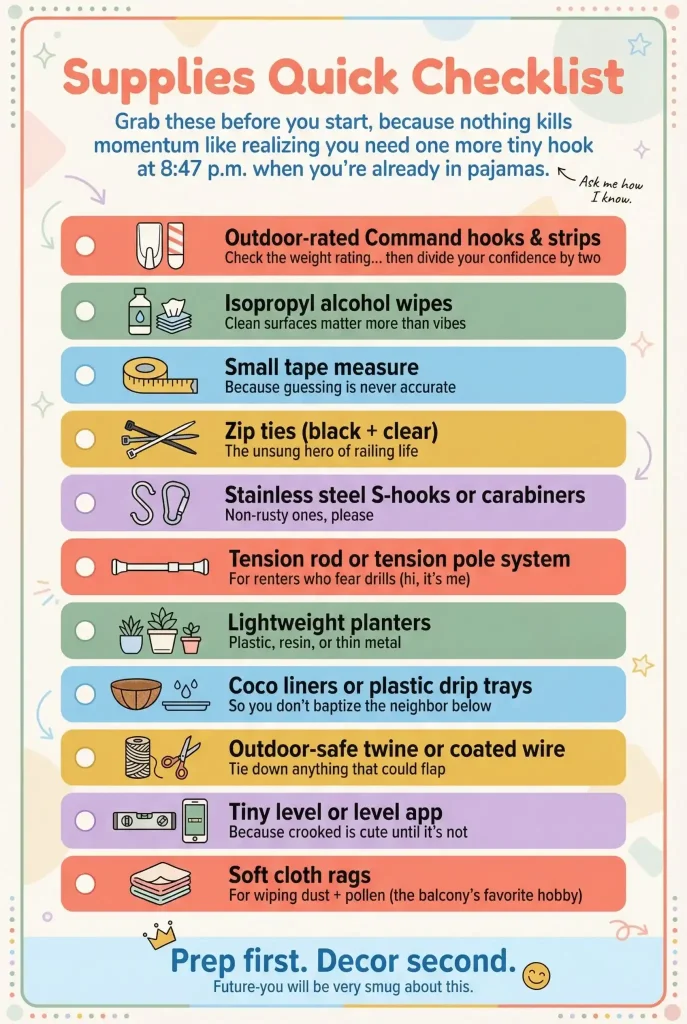
Before starting your balcony wall decor project, gather a few basic supplies. Having the right materials makes installation easier and helps prevent unnecessary damage or accidents.
- Outdoor-rated adhesive hooks and strips, always checking their weight limits
- Isopropyl alcohol and clean paper towels for preparing smooth surfaces
- A small measuring tape
- Black or clear outdoor zip ties
- Stainless-steel S-hooks or carabiners
- A tension rod or tension pole system for drill-free installations
- Lightweight resin, plastic, or thin-metal planters
- Coco liners or drip trays for controlling excess water
- Outdoor-rated twine or coated wire for securing loose items
- A small level or phone leveling app
- Soft cloths for removing dust, pollen, and outdoor debris
These simple supplies can make many apartment balcony decorating projects easier while keeping the installation relatively renter-friendly.
Read Your Balcony like a Tiny Weather Station
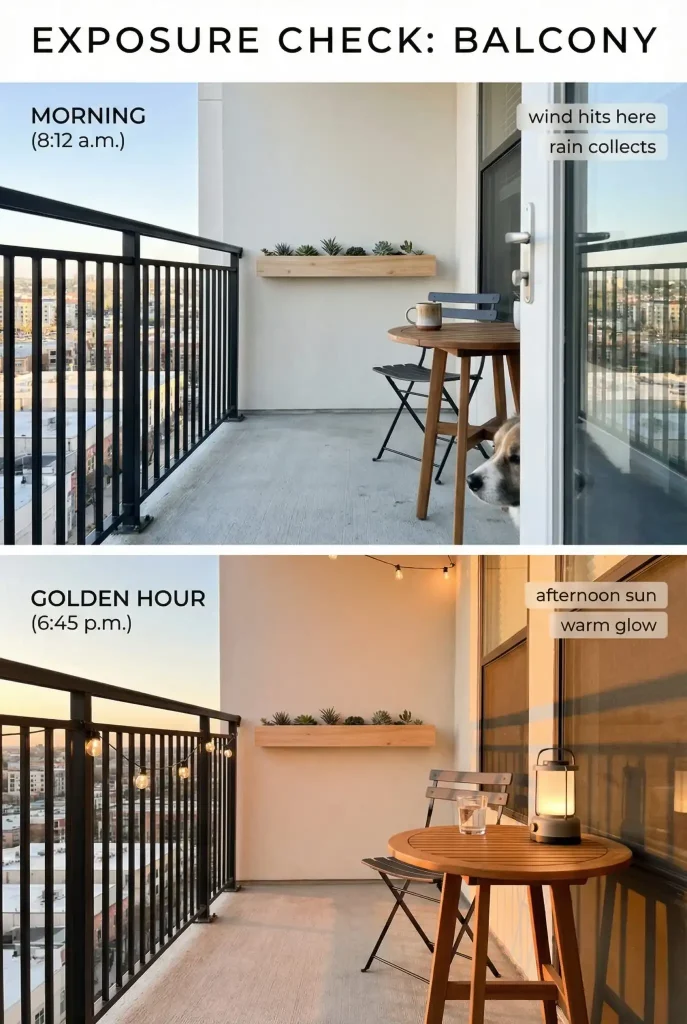
Before hanging anything, spend a few minutes observing the balcony. The conditions outside will determine which materials and installation methods make sense.
Check which areas receive direct sunlight, where wind tends to hit hardest, and where rainwater collects. These small details can determine whether your decor lasts for months or starts looking worn after only a few weeks.
If you have a small apartment balcony, this planning stage is even more important because every inch has to work efficiently. Take quick photos during different parts of the day so you can see how sunlight, shadows, glare, and privacy change.
A simple balcony check can include:
- Wind test: Hang a lightweight towel or cloth on the railing for a short time. If it moves aggressively, choose compact, low-profile decor.
- Sun test: Areas exposed to strong sunlight for several hours need UV-resistant materials.
- Water test: After rain, observe where water drips and collects. Keep planters from releasing water directly onto lower balconies.
- Privacy check: Sit where you normally relax and see which areas need more coverage.
Also check your rental agreement before installing anything. Some properties restrict drilling, railing attachments, or modifications to exterior walls.
A useful first step is to take one morning photo and one evening photo. This gives you a much better idea of how the space actually behaves throughout the day.
Tiny Detour: My Five-minute Hook Spiral
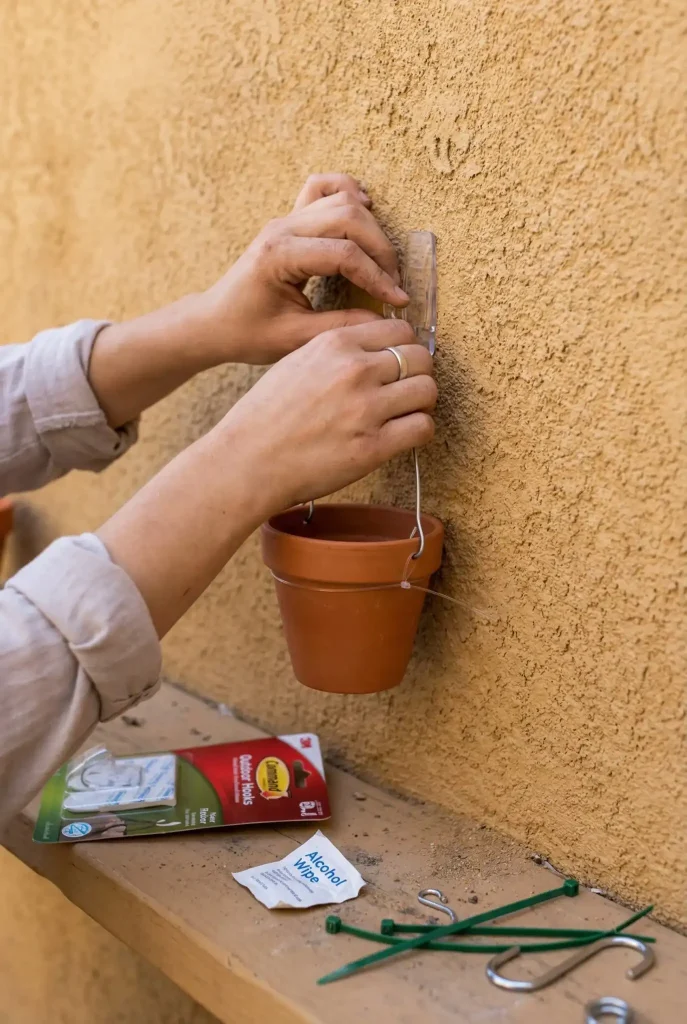
Outdoor adhesive hooks sound like an easy solution, but they deserve more thought than most people give them. A product that works perfectly indoors may not perform the same way outside.
Outdoor-rated adhesive still needs a clean, dry surface. Dusty, rough, or heavily textured walls may not provide enough contact for a dependable bond.
Wind also changes the equation. Decor does not simply add weight; it can catch air and create a pulling force. A lightweight decoration with a large surface area may put more stress on a hook than its weight suggests.
My basic rule is simple: if an item would cause a problem if it fell during the night, do not rely on adhesive alone. Consider a railing attachment, tension system, or secondary safety tie.
Before trusting an installation, give it a careful but firm test. For adhesive products, clean the surface with rubbing alcohol and allow it to dry completely before installation.
Step 1: Hanging Planters that Fix Sightlines and Privacy
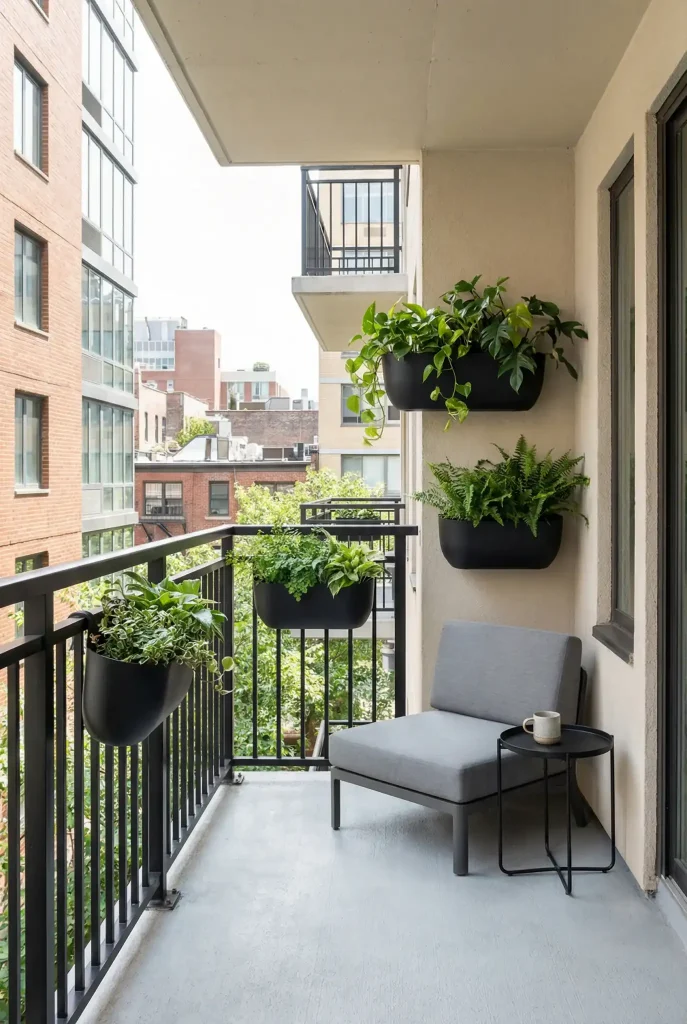
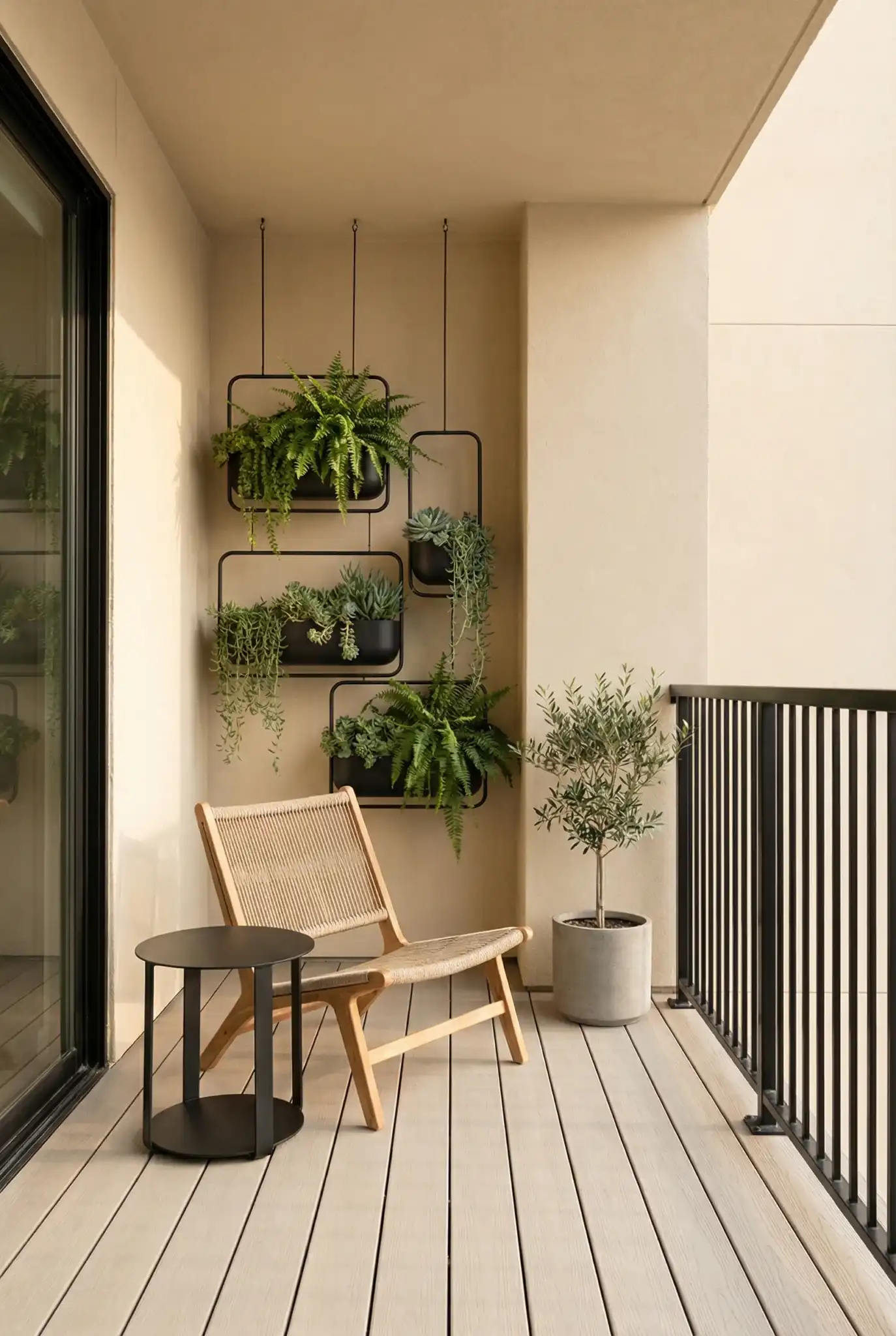
Hanging planters are one of the easiest ways to make a balcony feel greener without sacrificing floor space. They also have a practical advantage: they can improve privacy by placing foliage directly within your natural line of sight.
On a small balcony, vertical greenery can make the space feel more enclosed and comfortable. Instead of filling the floor with large pots, you can use the walls and railing areas to create layers of plants.
Try a staggered arrangement rather than placing everything at exactly the same height. One planter can sit higher, another around the middle, and another closer to your seated eye level. This creates depth while helping soften views of nearby buildings or windows.
The result can feel like a natural privacy screen without using bulky fabric panels.
Where Hanging Planters Work Best
Hanging planters are especially useful on narrow balconies because they keep walking areas open while adding height and greenery.
For a small balcony, use corners, railing edges, and vertical wall space so the main walkway remains clear. For a larger patio, group planters closer to the seating area to create a defined outdoor zone.
The goal is to make the greenery feel intentional rather than turning the balcony into a collection of randomly placed pots.
Materials that survive outside
Outdoor planters need to handle sunlight, moisture, and temperature changes without becoming unnecessarily heavy.
Good options include:
- Resin planters
- Lightweight plastic pots
- Powder-coated metal
- Thin metal containers
- Sealed wood used carefully in protected areas
For hanging systems, look for coated steel chains, stainless-steel hooks, or outdoor rope designed to resist moisture and deterioration.
If you prefer wood, make sure it is properly sealed and positioned where it will not remain wet after every rainfall.
What to avoid (wind will humble you)
Heavy hanging decor becomes much riskier when exposed to strong wind. Avoid anything that could swing, fall, or become difficult to control.
- Heavy ceramic hanging pots
- Containers that release water freely over the balcony edge
- Loose macramé that can become soaked or catch strong wind
- Hanging baskets without a secure secondary attachment
- Large lightweight decorations that can act like sails
Outdoor decor should always be selected with the local weather conditions in mind.
Renter-safe ways to install
There are several ways to create balcony hanging decor without permanently changing the property.
- Railing planters: Attach them securely and add zip ties if needed to prevent movement.
- Railing clamp hooks: These can provide a removable hanging point without drilling.
- Tension systems: Floor-to-ceiling tension poles can create vertical hanging space.
- Outdoor adhesive hooks: Use these only for very lightweight items on suitable smooth surfaces, preferably with an additional safety tie.
Always check the manufacturer’s weight recommendations rather than assuming an attachment can support a particular item.
The sightline trick (my favorite part)
If privacy is your main reason for adding plants, place them according to where you actually sit rather than simply filling the highest available wall space.
Mid-height greenery can be particularly effective because it blocks unwanted views while keeping the balcony open and comfortable.
For taller neighboring windows, use higher planters with trailing foliage. If visibility is mainly coming through the lower railing area, fuller plants placed lower can help close those gaps.
Artificial greenery can also work if maintaining live plants is difficult. Choose outdoor-rated options and secure them properly so they do not become loose in the wind.
Step 2: Outdoor Artwork that Won’t Fade, Warp, or Fly Away
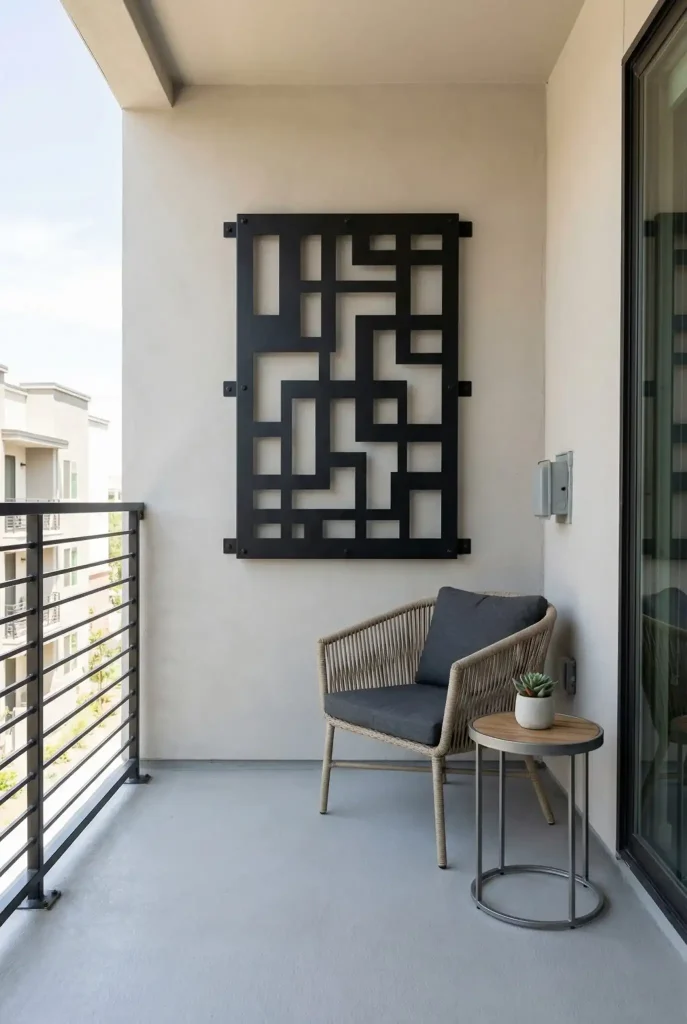
Outdoor wall art can give a balcony an instant focal point, but outdoor artwork needs to be chosen differently from indoor decoration.
Direct sunlight can cause fading, moisture can damage unsuitable materials, and wind can loosen poorly mounted pieces. Look for lightweight artwork made specifically for outdoor conditions.
On a small balcony, one statement piece behind the seating area can be enough. A larger patio can handle two or three coordinated pieces, but keeping the arrangement restrained usually creates a cleaner appearance.
Outdoor artwork is also useful for making rental spaces feel more personal. Plain stucco, basic exterior fixtures, and other features you cannot change can become less noticeable when the wall has an intentional focal point.
Where outdoor art works best
Placement matters as much as the artwork itself.
- Small balcony: Put one larger piece behind or near the seating area.
- Larger patio: Create a compact grouping of two or three coordinated pieces.
- Seating zone: Use art where it can be seen naturally instead of placing it in an awkward or difficult-to-reach location.
The goal is to create a visual anchor without making the wall feel overloaded.
Materials that actually survive outdoors
Choose materials that are lightweight and designed to handle outdoor exposure.
Some practical options include:
- Powder-coated metal panels
- Outdoor-rated resin artwork
- Aluminum composite prints
- UV-resistant outdoor fabric panels
If using fabric, secure it at multiple points so it cannot flap excessively in strong wind.
What to avoid (please trust me)
Some indoor decorating materials simply do not belong outside.
- Indoor wooden or MDF frames
- Framed glass artwork
- Indoor canvas stretched over standard bars
- Lightweight pieces with large surfaces that can catch wind
- Materials that absorb moisture easily
Even attractive pieces can quickly become damaged when exposed to weather they were never designed to handle.
Renter-safe installation options
You can add outdoor wall decor without automatically reaching for a drill.
- Railing-mounted grids or trellises: Create a lightweight vertical structure for hanging small pieces.
- Tension systems: Use tension rods or poles as temporary hanging frameworks.
- Outdoor adhesive strips: Reserve these for very lightweight pieces and suitable smooth surfaces.
- Cable ties and hooks: Useful when attaching decor to an existing railing or approved structure.
Always make sure the installation is secure and does not interfere with doors, walkways, drainage, or safety equipment.
The UV and Glare Problem, Solved With Light Placement
Lighting can make a balcony feel much more inviting after sunset, but placement matters. Solar lanterns and small outdoor lights work best when they create a soft glow instead of shining directly into your eyes.
Mount lanterns around eye level or slightly above and position them so the light spreads across the area rather than creating harsh glare.
For simple balcony lighting ideas without permanent wiring, consider:
- Clip-on lantern hooks attached securely to railings
- Lightweight adhesive hooks for suitable string lights
- Tension rods holding small lanterns at different heights
If a nearby exterior light makes your balcony feel overly bright, combining artwork with softer decorative lighting can help create a more balanced atmosphere.
Step 3: Shelves and Vertical Accents that Make the Wall do Actual Work
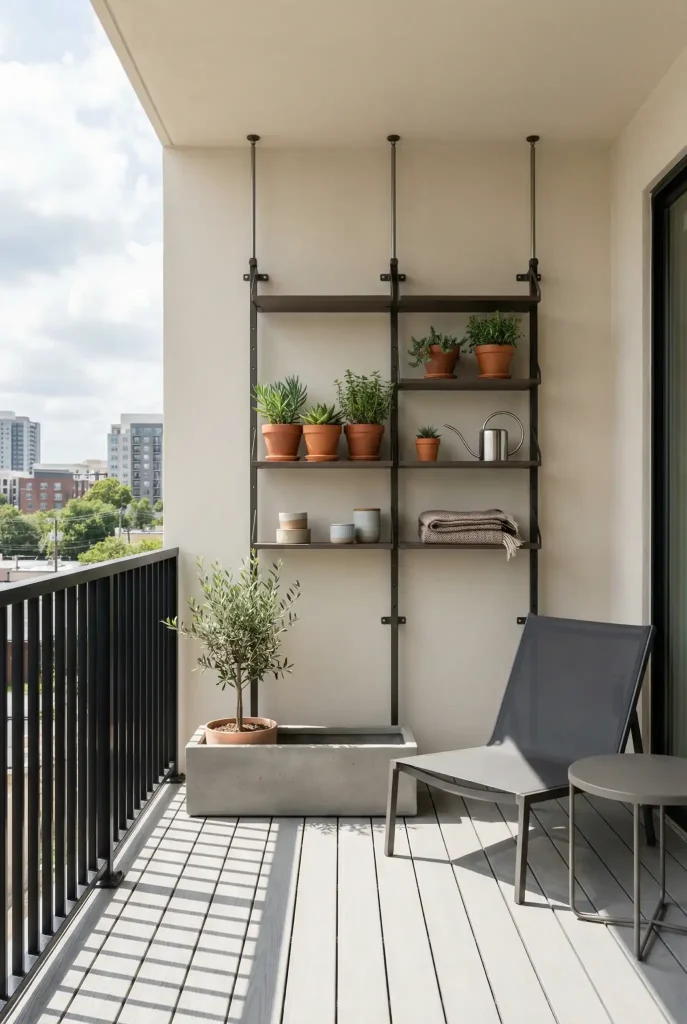
Shelves are useful when you want your balcony wall decor to do more than simply look attractive. They can provide storage, display space, and room for plants while keeping the floor relatively clear.
For a tiny balcony, a narrow vertical shelf can hold plants, lanterns, and a few outdoor accessories without taking over the walking area.
On a larger patio, shelves can help define a particular zone, such as a plant display, serving area, or small outdoor entertaining space.
Choose shelving designed for outdoor conditions and avoid systems that are too bulky or unstable. Wind can quickly turn an unsecured shelf into a hazard.
Where shelves work best
Placement should support movement rather than interfere with it.
- Small balcony: Use one slim vertical shelf near a corner.
- Larger patio: Consider a taller or wider unit that works as a backdrop for a seating area.
- Narrow spaces: Prioritize vertical shelving over deep shelves.
A good shelf should add function without making the balcony feel crowded.
Materials that survive outside
For reliable outdoor storage solutions, choose materials that resist moisture, rust, swelling, and peeling.
Good choices include:
- Powder-coated steel
- Aluminum
- Outdoor-grade resin
- Properly sealed hardwood
- Outdoor composite materials
Even durable materials benefit from occasional cleaning and maintenance, especially in areas with heavy rain or strong sun.
What to avoid (the silent shelf killers)
Avoid materials and arrangements that are likely to deteriorate or become unstable outdoors.
- Particleboard or MDF
- Untreated wood
- Heavy ceramic objects placed high up
- Top-heavy arrangements
- Shelves that can easily wobble or tip
Remember that wind and moisture can make an already unstable setup considerably more problematic.
Renter-safe ways to add shelving
Renters have several options for adding vertical storage without drilling permanent holes.
- Clamp-on railing shelves: Attach directly to suitable railings.
- Tension pole shelving: Use adjustable floor-to-ceiling systems.
- Freestanding narrow shelf ladders: Position them against a wall and secure them where appropriate.
- Wall grids: Attach lightweight metal grids to existing structures and use them as organizers.
Always check whether your building allows attachments to railings or exterior structures before installing anything.
How to style shelves without making a mess
The easiest way to make balcony shelves look intentional is to resist filling every available space.
Try using a few larger objects rather than many tiny decorations. Repeating materials and leaving some empty space can make the entire setup look calmer.
A simple combination could include:
- One or two medium-sized plants
- A stable lantern or candle holder
- A small outdoor tray or basket
- One textured weather-resistant accessory
The same principle applies to rugs and other floor decor. Outdoor pieces can complete the look, but secure them properly so wind cannot fold, lift, or move them around.
A quick improvement is to add one narrow shelf and style it with roughly three substantial pieces instead of covering it with small objects.
Step 4: Safety, wind, and not becoming the neighborhood cautionary tale
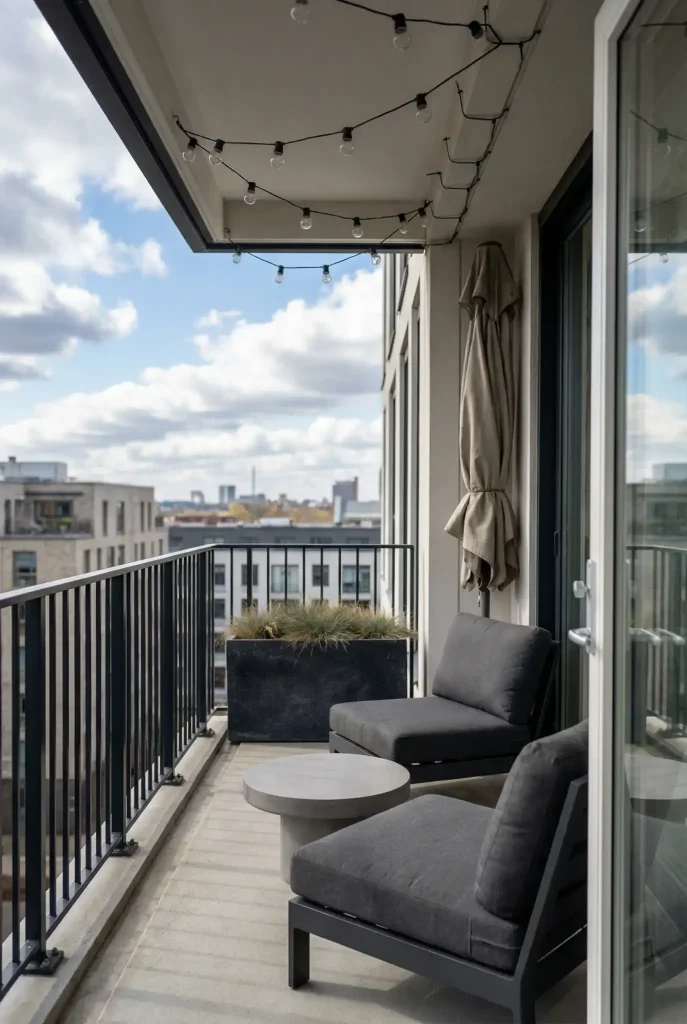
Balcony safety should always come before decoration. Wind, elevated heights, railing limitations, and building rules can turn an attractive decorating idea into a serious problem if the setup is not secure.
If you rent, avoid drilling into exterior walls unless your property specifically permits it. Waterproofing and building structures can be damaged by inappropriate modifications.
Remember that balconies are elevated spaces. Anything that can fall or be lifted by wind needs extra attention. If children or pets use the balcony, keep climbable furniture and unstable decorations away from railings.
The basic rule is straightforward: secure anything that can move, check it after windy weather, and never allow decor to interfere with exits or walkways.
What not to put on your balcony
Avoid decorations that could become unstable or dangerous.
- Heavy objects balanced on railings
- Tall planters without proper support
- Fragile glass decorations
- Flammable items near heat sources
- Objects blocking doors or walking paths
- Lightweight decor that could be carried away by wind
When in doubt, choose the lighter and more secure option.
Quick safety checks I actually do
A few simple checks can prevent many problems:
- Give hanging decorations a firm tug to check their attachment.
- Review the weight rating and avoid pushing the attachment to its maximum capacity.
- Keep climbable objects away from railings.
- Make sure planters can drain without sending water onto lower balconies.
- Check attachments again after severe weather.
Adding a discreet secondary safety tie to hanging decor can provide an extra layer of protection.
Weather Backup Plan: When the Forecast Gets Rude
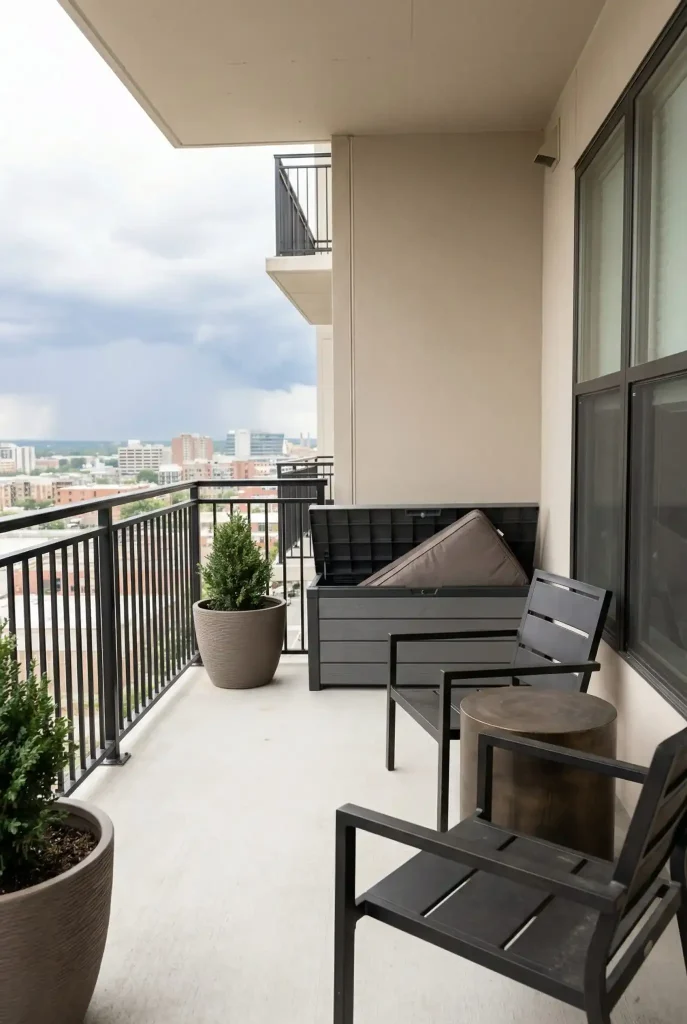
Outdoor decorating requires some flexibility because weather conditions change throughout the year.
Before a major storm, bring lightweight decorations and moisture-sensitive fabrics indoors. During especially windy periods, replace loose or highly flexible decor with more compact, secure pieces.
Strong summer sunlight can also cause fading. Choosing UV-resistant materials from the beginning can help extend the life of your decorations.
It is also worth creating a small storage area for items that need to come inside quickly. A compact storage bench, weather-resistant box, or designated container can make storm preparation much less stressful.
The goal is not to keep every piece outside all year. The goal is to make your setup easy to protect when the weather changes.
Does This Actually Add Value, or Just Look Like Clutter?
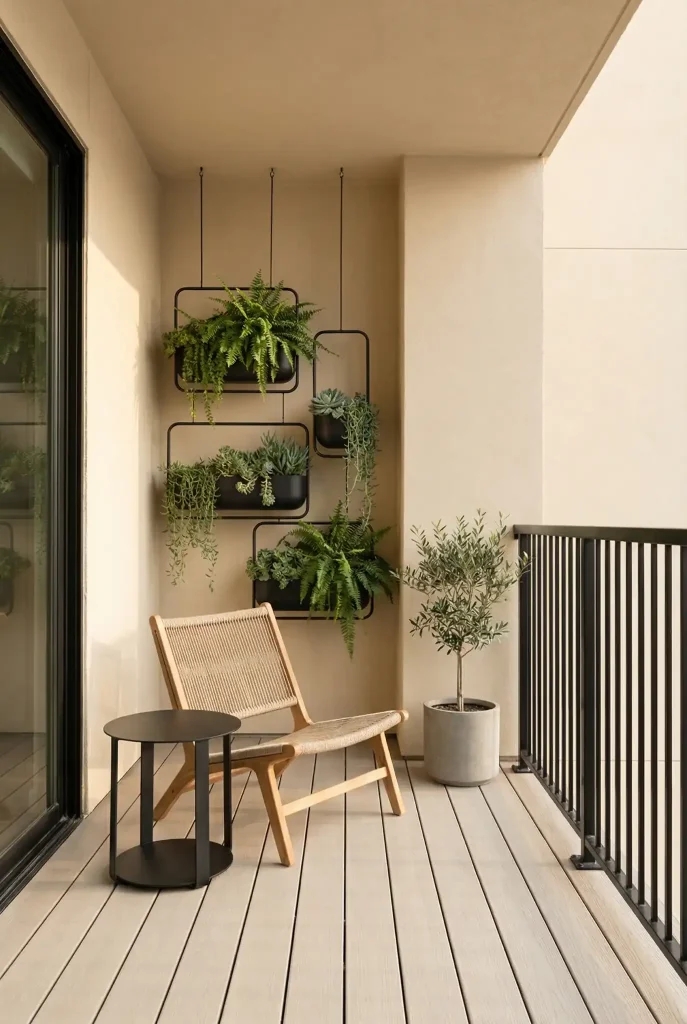
A thoughtfully decorated balcony can make a home feel more usable and visually appealing. Even without increasing the actual square footage, a comfortable outdoor area can feel like an extension of the living space.
The difference often comes down to organization. A cohesive balcony feels intentional, while too many unrelated objects can make it look like storage overflow.
The wall is especially important because vertical elements can pull the whole space together. One well-positioned artwork piece, a narrow shelf, or a layered planter arrangement can create a finished look without filling every inch.
If rental or resale appeal matters, stick with a simple color palette, durable materials, and easy-to-maintain pieces. Hide unnecessary clutter and choose decorations that have a clear purpose.
The goal of balcony wall decor is not to prove how much decoration you can fit into one space. It is to create a small outdoor room that feels comfortable, organized, and genuinely useful.
A simple final trick: remove one item that feels unnecessary. Sometimes creating more space does more for the balcony than adding another decoration.
The Calm Part: Restraint is the Whole Point
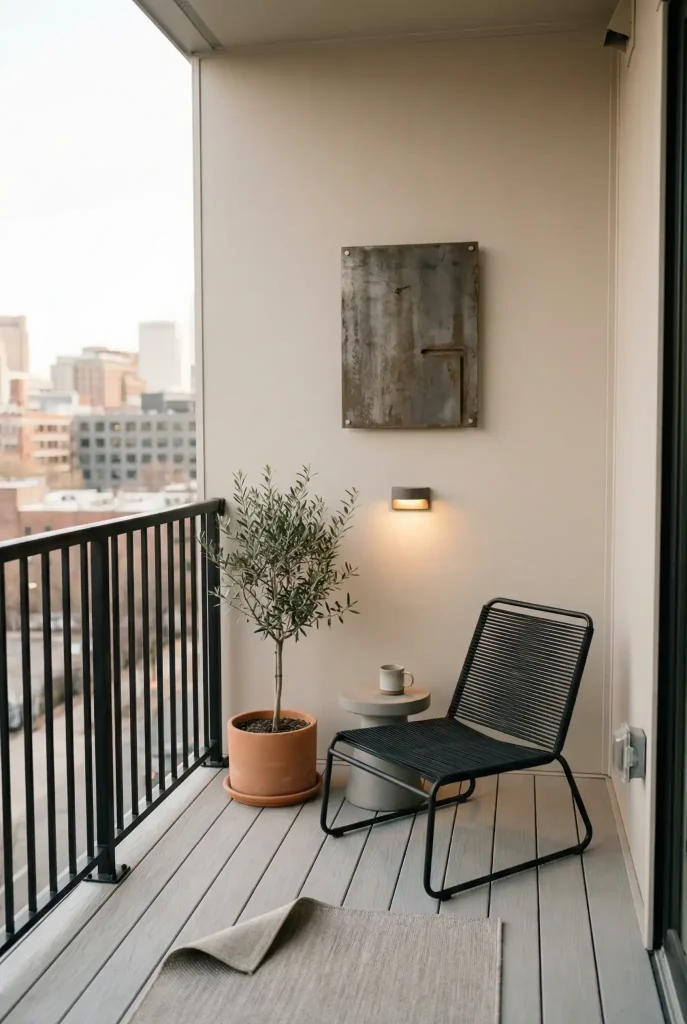
The best balcony decor does not need to be complicated. A few carefully selected vertical elements can make a surprisingly big difference.
Start with one purpose. Maybe you need privacy, more greenery, better lighting, or additional storage. Then choose decor that solves that problem while also contributing to the overall style.
For renters especially, removable systems, lightweight materials, and secure installations make it possible to create a beautiful balcony without permanent changes.
Keep the wall balanced, leave some empty space, and choose pieces that can handle the weather. When every item has a reason to be there, your balcony feels less like a collection of decorations and more like a small outdoor room.
That is really the secret to successful balcony wall decor: use the vertical space, respect the weather, prioritize safety, and stop decorating before the space starts asking you for a storage unit.