
Smart Ways to Organize Belts in a Closet That Actually Work

When it comes to closet organization, belts often get overlooked.
They are often tucked into drawers, left on random hooks, or squeezed into whatever small space is available. I used to do the same thing until I decided to properly organize my closet. After trying a few different methods, I found several simple ways to keep belts neat, accessible, and protected.
Here are practical tips and storage ideas to help you organize belts in your closet while keeping them in excellent condition.
Understanding Your Belt Collection
Before organizing your belts, take a moment to understand what you have.
Look through your collection and consider how many belts you own, what materials they are made from, and how often you wear each one. You may have leather belts, canvas belts, casual styles, formal options, or special-occasion pieces.
For example, canvas belts are flexible and easy to store. They can be rolled, hung, or folded without much risk of damage.
More expensive or special-occasion belts may need additional protection. A belt storage box can help keep them safe, especially if they have delicate buckles or are made from sensitive materials.
Knowing the size and variety of your collection makes it much easier to choose a storage method that works for your closet.
Organize Belts in Closet: 8 Best Methods
1. Drawer Dividers: A Good Option for Small Collections
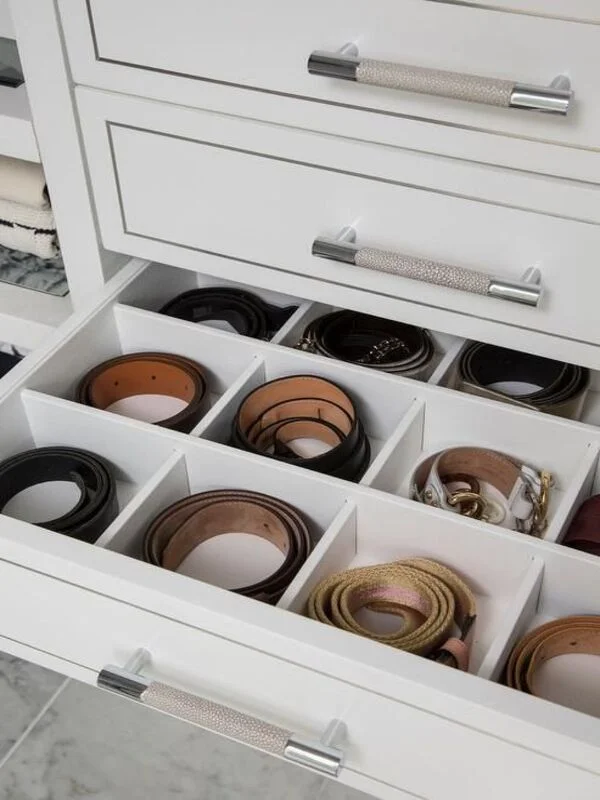
If you only have a few belts, drawer dividers can be an excellent way to keep them organized.
A drawer with individual sections allows you to separate each belt, making them easier to find and preventing them from becoming tangled.
If you like the Marie Kondo approach, try rolling your belts before placing them inside the drawer. This can save space and make it easier to see your options.
2. Belt Hangers and Organizers
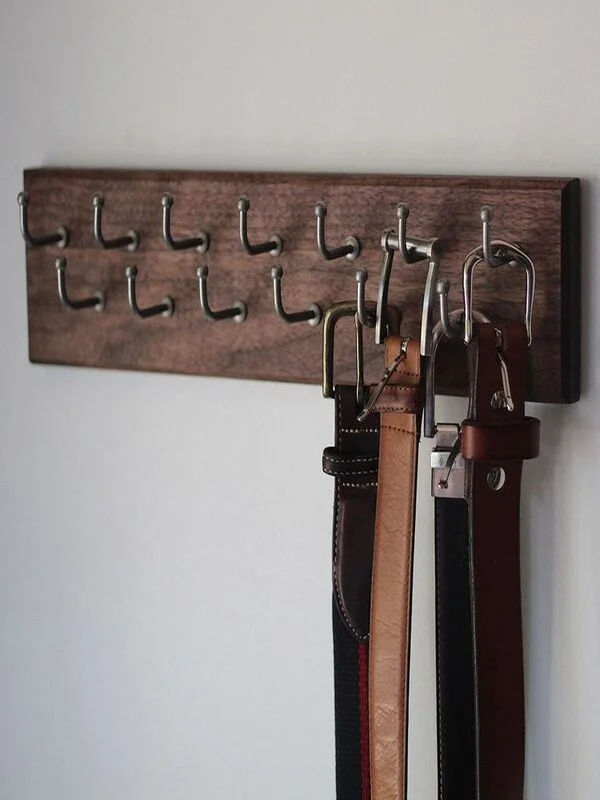
If you want your belts to stay visible and easy to reach, belt hangers are a great choice.
You can hang belts from a closet rod or use hooks on the back of a closet door. Belt ring hangers and sliding belt racks are also useful if you have a larger collection.
Keeping belts visible makes it easier to choose the right one when putting together an outfit.
3. Closet Wall for Maximizing Storage Space
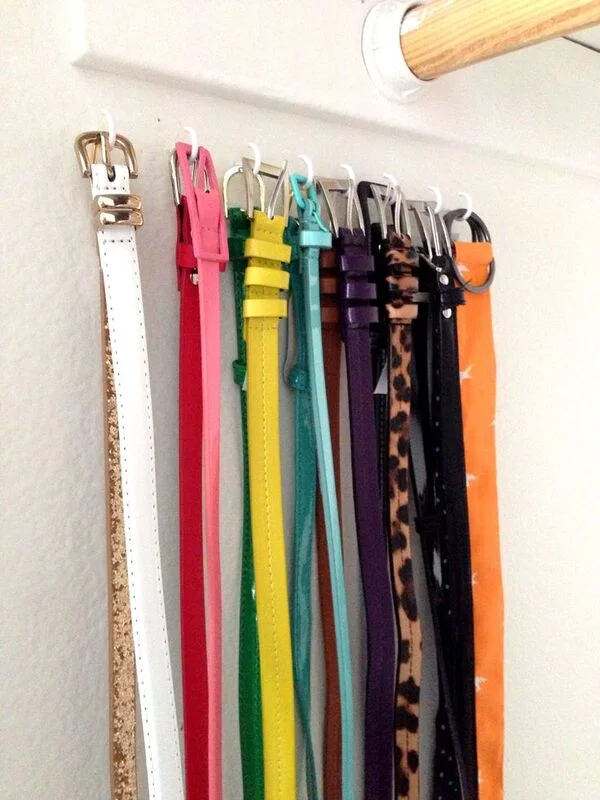
An unused closet wall can become valuable storage space for your belts.
Consider installing a small piece of wood with hooks or a metal bar designed for hanging accessories. This gives your belts a dedicated place while making use of an area that might otherwise remain empty.
This option works especially well if you have a large belt collection and enough wall space inside your closet.
4. Pull-Out Belt Racks or Drawers
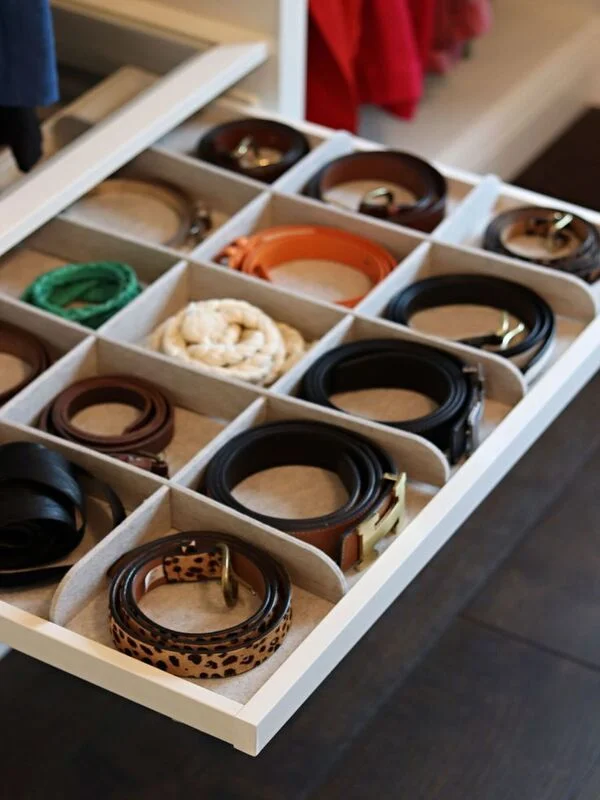
For a more built-in and polished closet setup, consider pull-out belt racks or drawers.
These storage options provide excellent visibility and make it easy to access your entire collection. They can be especially useful in larger closets where you want every accessory to have a dedicated location.
Pull-out racks can also help keep belts separated instead of stacking them on top of one another.
5. Shower Curtain Rings and DIY Solutions

For an affordable and creative option, use shower curtain rings with a hanger.
Simply attach the rings to a sturdy hanger and use them to hold lightweight belts. This DIY method takes up very little room and can also work for scarves and other small accessories.
It is a useful choice if you enjoy simple storage projects and want to make use of items you already have at home.
6. Hanger Cup Hooks
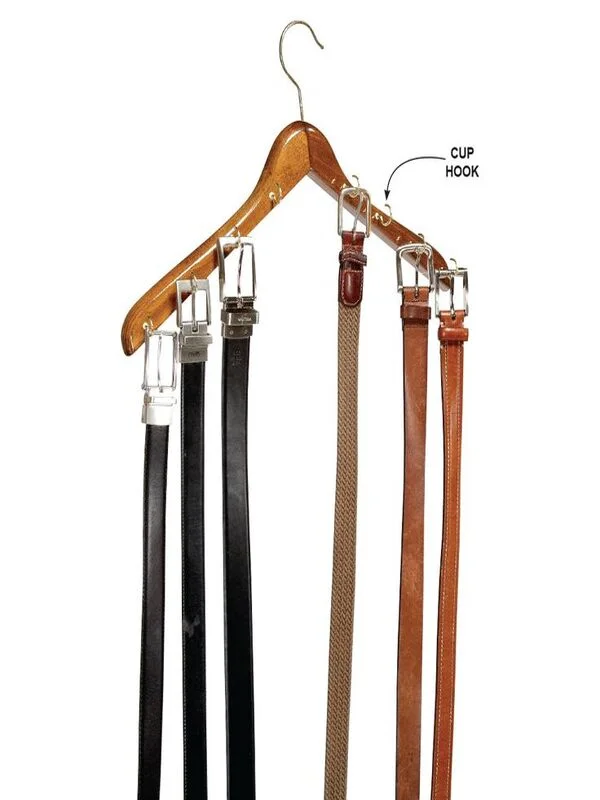
In a small closet, every inch of storage space matters.
You can use shallow shelves, the back of a closet door, or a small hanging organizer to create additional storage. Another simple option is attaching cup hooks to a hanger and using them to hold your belts.
This method requires very little space and can be especially helpful when you do not have room for a full-size belt rack.
7. Command Hooks for a Temporary Solution
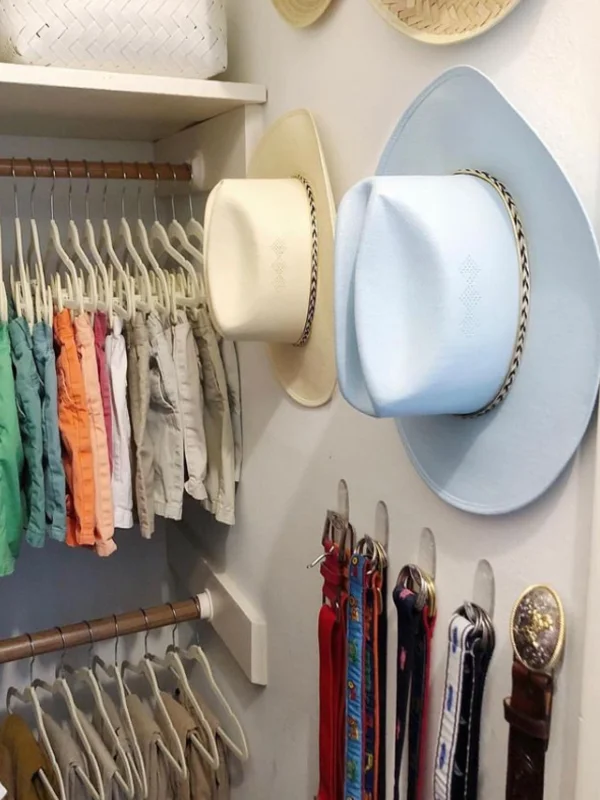
If you do not want to drill holes into your closet, command hooks can be a convenient alternative.
They are useful for temporary storage and allow you to test a particular arrangement before choosing a permanent solution.
You can place them on a closet wall or door and adjust your setup as your storage needs change.
8. Meat Hooks for Extra Space-Saving
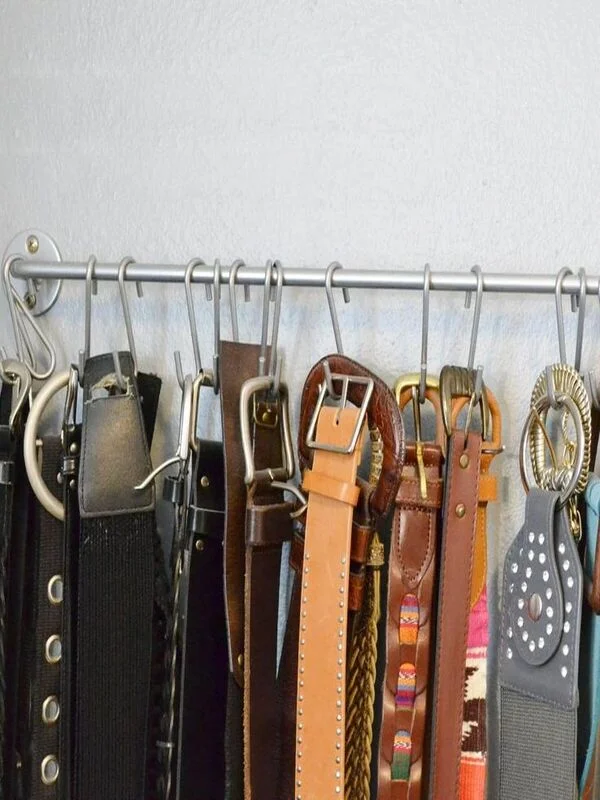
Meat hooks may not sound like the most stylish closet accessory, but they can work surprisingly well for belt storage.
Attach the hooks to your closet rod and use them to hang individual belts. One advantage of this method is that you can use as many hooks as you need.
This approach is also useful for storing scarves, handbags, and other accessories.
Best Tips for Belt Organization
Consider how frequently you wear each belt when deciding where to store it. Keep your favorite and frequently used belts somewhere easy to reach, while occasional-use belts can go in less accessible areas.
Avoid direct sunlight, especially when storing leather belts. Prolonged exposure can cause leather to fade and become dry over time.
Maintain the shape of your belts by rolling them carefully for long-term storage. This can help prevent unnecessary creases and folds.
Label your storage areas if you have a large collection. Simple labels can make it easier to find specific types of belts quickly.
Use different storage methods for different types of belts. For example, casual canvas belts can go in drawer organizers, while formal leather belts may be better suited to dedicated hangers.
Get creative with storage solutions. A simple wooden board with hooks can become both practical and attractive, while shower curtain rings or other household items can provide inexpensive storage.
The Importance of Regular Maintenance
Regular maintenance is important for keeping your belts looking their best.
Clean and condition leather belts when appropriate, and periodically check whether your current storage method still works for your collection. As you buy new belts or change your wardrobe, you may need to adjust your organization system.
Pay particular attention to belt buckles. Large or decorative buckles can become scratched or damaged if they are stored incorrectly.
For expensive or special-occasion belts, consider keeping them flat or placing them inside a belt storage box. This can provide additional protection and reduce unnecessary strain on the belt and buckle.
How Should You Organize Belts in Closet
Whether you own just a few belts or have an extensive collection, there are plenty of ways to keep them organized, accessible, and protected.
Drawer dividers, belt hangers, closet-wall hooks, pull-out racks, and simple DIY solutions can all work depending on your available space and personal preferences.
The best storage method is the one that fits your closet, keeps your belts in good condition, and makes them easy to find when you need them.
With a little organization, belt storage can become a simple part of your closet routine rather than another messy task.