How to Decorate a Small Balcony (8 Steps Guide for Tight Spaces)
If you’re wondering how to decorate a small balcony, you’re definitely not alone. Even a tiny small apartment balcony can become a cozy outdoor space, whether you’re renting, working with a limited budget, or currently using it to store random household items. The key is to make the space feel intentional, comfortable, and useful rather than crowded.
Start by taking a few measurements and deciding how you want to use the balcony. From there, choose furniture that fits without blocking the doorway, add plants without sacrificing your walkway, and bring in simple touches like cushions, lighting, and a small rug. You’ll also want to consider practical details such as wind, shade, rain, and where to store cushions when the weather changes. The goal isn’t perfection—it’s creating a cute, comfortable, and workable balcony that feels like an extension of your home.
Quick Win Box: The Small Balcony Rules (Read This First)
- Door swing first: Keep the door and main walkway completely clear.
- Choose one main purpose: Decide whether the balcony is mainly for dining, lounging, or gardening.
- Go vertical: Use walls, railings, and hanging planters instead of filling the floor with pots.
- Choose one hero piece: One strong furniture piece usually works better than several small items.
- Repeat accents: Use one accent color in three places to create a coordinated look.
- Make everything wind-safe: Secure lightweight decor and avoid unstable, top-heavy planters.
- Use the three-layer cozy formula: Combine flooring, lighting, and textiles to make the balcony feel like an outdoor room.
- Plan for storage: Every item should have a designated place so clutter does not take over.
Step 0: Before You Start: Measure + Pick Your Balcony Purpose (10 Minutes)
Before buying anything, measure your balcony and decide how you want to use it. This simple step prevents you from choosing furniture that looks great online but leaves no room to move. Start by checking the door swing and your natural step-out path, then measure the balcony’s width, depth, and railing height. Also pay attention to sunlight, shade, and wind because these details will affect your furniture, plants, and privacy choices.
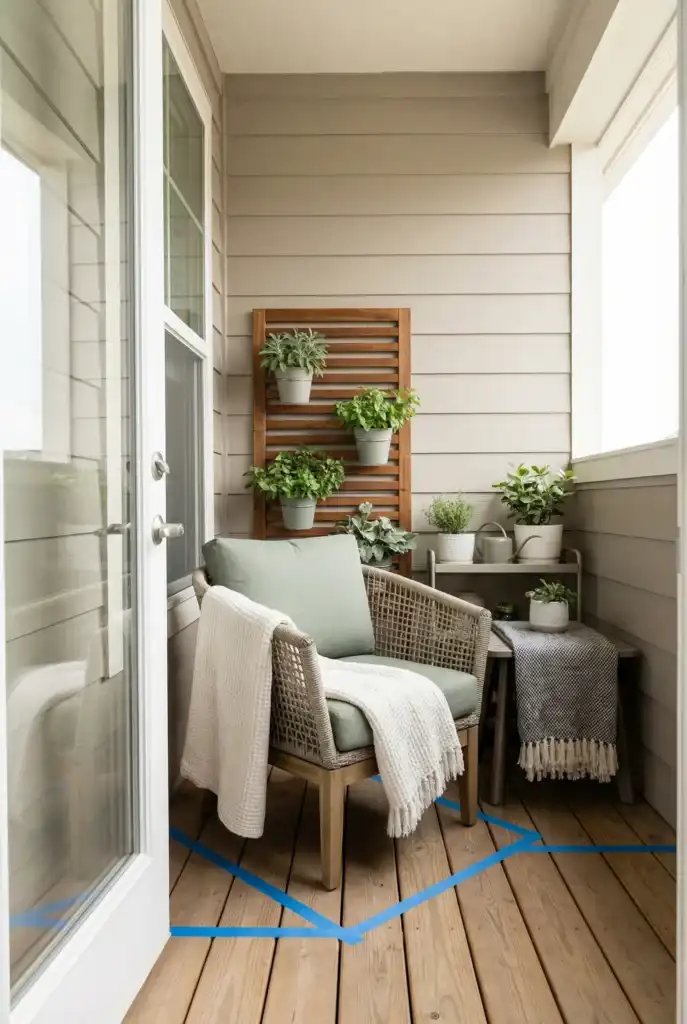
Use painter’s tape to mark the approximate footprint of furniture on the floor. This gives you an instant idea of whether everything will actually fit. Check the width and depth, door clearance, railing height, sun direction, wind direction, and any building rules about drilling, screens, grills, or drainage. Taking an overhead photo from inside the doorway with your tape markings can also make planning much easier.
What Kind of Balcony Are You Decorating?
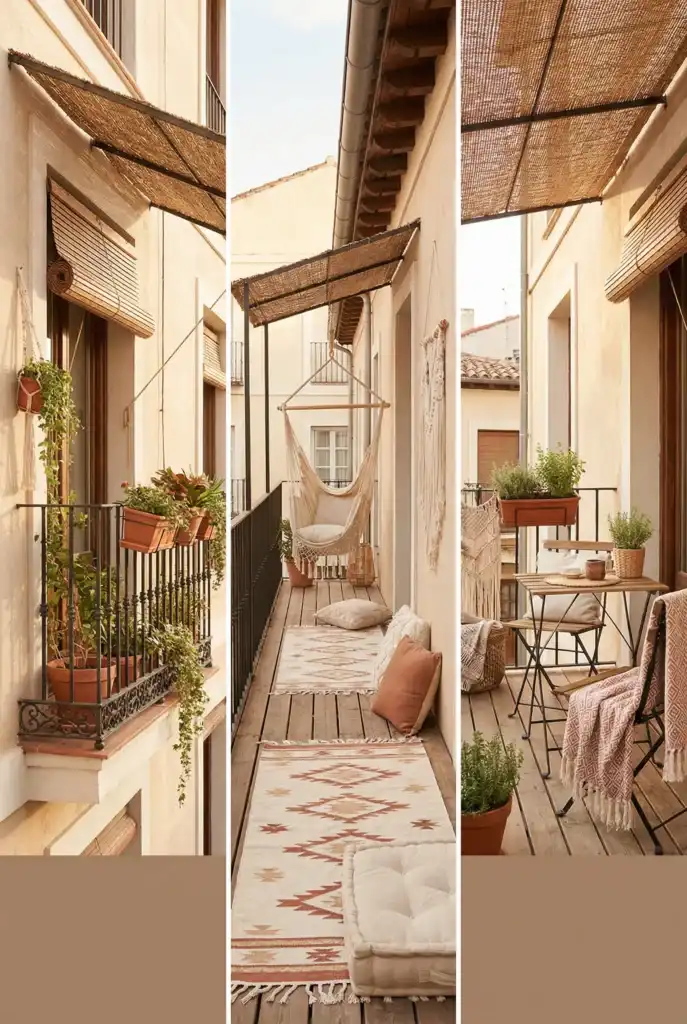
Your balcony shape determines which furniture and layouts will work best. A Juliet balcony is mostly about plants and railing decor, while a narrow walkway balcony needs careful planning to preserve the path. A square or box-style balcony gives you more flexibility and can often accommodate a small dining or lounge area.
- Juliet balcony: Best for plants, railing decor, and a small perch.
- Narrow walkway balcony: Works well with slim seating or a compact coffee setup.
- Square or box balcony: Ideal for a bistro table, lounge corner, or layered styling.
Your balcony is not difficult to decorate—you simply need to work with its shape instead of against it.
“Choose Your Purpose” Mini Menu (Pick One)
Choose one main purpose before adding furniture or decor. A clear purpose helps the balcony feel organized instead of crowded and makes it easier to decide what belongs there.
- Coffee and laptop corner
- Reading nook
- Balcony garden
- Mini dining setup
- Pet zone
When you cannot decide, ask yourself what would make you want to step outside tomorrow. Start with that function and build the rest of the design around it.
Step 1: How to Decorate a Small Balcony: Choose a Space-Saving Layout (3 Proven Layout Recipes)
A smart layout can make even a tiny balcony feel intentional and comfortable. Before shopping for plants, rugs, or accessories, decide where your main furniture will go and make sure the doorway and walking path stay open. Small balconies can quickly feel crowded, so it is better to choose one layout and work within it than to collect random pieces.
Pick the layout that matches your balcony shape and main purpose. Once the basic arrangement is set, choosing the right hero furniture piece becomes much easier.
30-Second Layout Selector (Pick Your Best Fit)
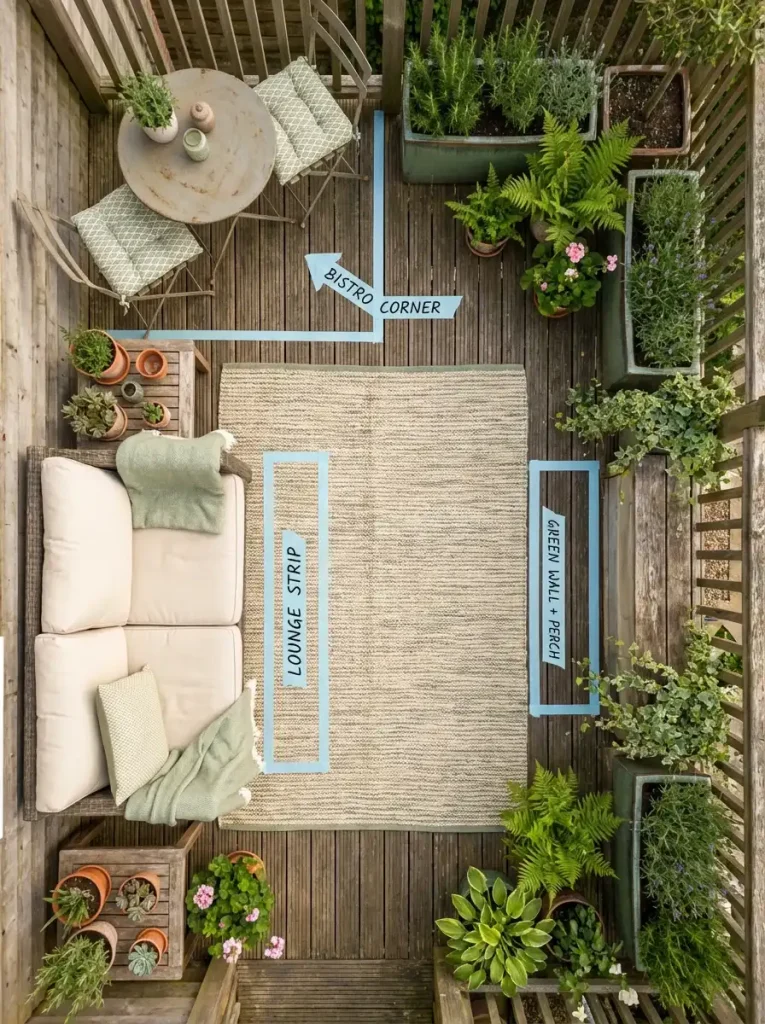
Choose the option that best matches your space and lifestyle.
- Very narrow balcony: Green Wall + Perch
- Dining for two: Bistro Corner
- Lounging most days: Lounge Strip
- Plants plus privacy: Green Wall + Perch
- Tight door swing: Rail table or one chair
Layout A: Bistro Corner (Best for 2-Person Dining)
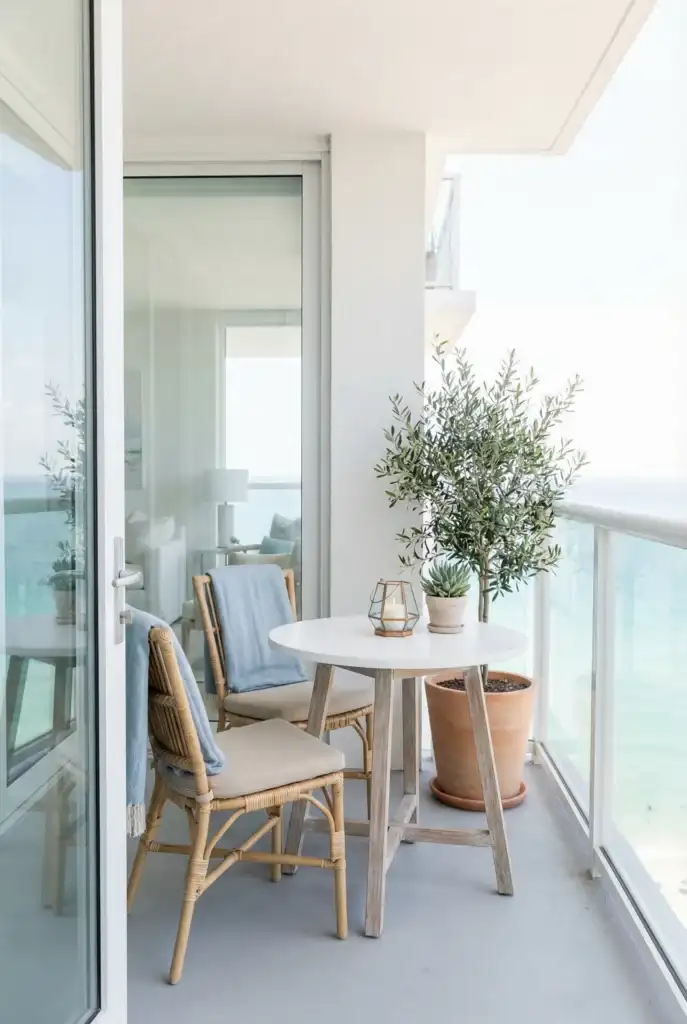
A bistro corner is perfect for morning coffee, casual meals, or enjoying a quiet evening outside. Place a small table toward the far end of the balcony, away from the door, and tuck the chairs toward the railing. This keeps the entrance open while giving you a dedicated dining zone.
A round table can work especially well because it avoids sharp corners in tight areas. Choose slim chairs and avoid deep seating. If two chairs make the space too crowded, use one chair with a railing perch instead.
- Place the table in the far corner
- Tuck chairs toward the railing
- Keep the doorway and walkway open
- Add a small plant or lantern to finish the corner
Layout B: Lounge Strip (Best for Long, Narrow Balconies)
For a long, narrow balcony, place a slim bench or compact lounge chair along the longest wall. Add a small side table that is easy to reach without blocking the walkway. The goal is to create a comfortable seating zone while leaving enough open floor to move around.
Whenever possible, choose furniture that performs more than one job. A storage bench can provide seating and hide cushions or outdoor accessories at the same time. Keep most of the styling toward one end so the entrance remains open.
- Use slim seating along the wall
- Add a compact side table
- Choose storage seating when possible
- Keep most of the floor open
Layout C: Green Wall + Perch (Best for Plant Lovers)
If plants are your priority, use the walls or railing instead of filling the floor with pots. Create one strong vertical plant zone and add a single chair, stool, or rail table as your perch. This gives you greenery and privacy without turning the balcony into an obstacle course.
Layer plants at different heights to make the setup look intentional. Combine one tall plant, a medium-sized cluster, and a trailing variety to create a natural green backdrop.
- Create one vertical plant zone
- Add one small perch
- Keep the center walkway clear
- Let plants provide most of the decoration
Quick win: Choose one layout and commit to it before buying anything.
Step 2: Buy the Right-Sized Furniture (Foldable > Bulky)
Oversized furniture is one of the quickest ways to make a small balcony feel cramped. Instead, look for slim, lightweight, and flexible pieces that are easy to move or fold away. Open legs and narrow frames also help maintain a visual connection with the floor, making the balcony appear more spacious.
Foldable balcony furniture is especially useful because you can clear the space whenever you need it. Choose one main or “hero” piece and let the other furniture support it rather than competing for space. Most importantly, make sure your seating is actually comfortable enough to use.
Best Small Balcony Furniture Pieces (Renter-Friendly)
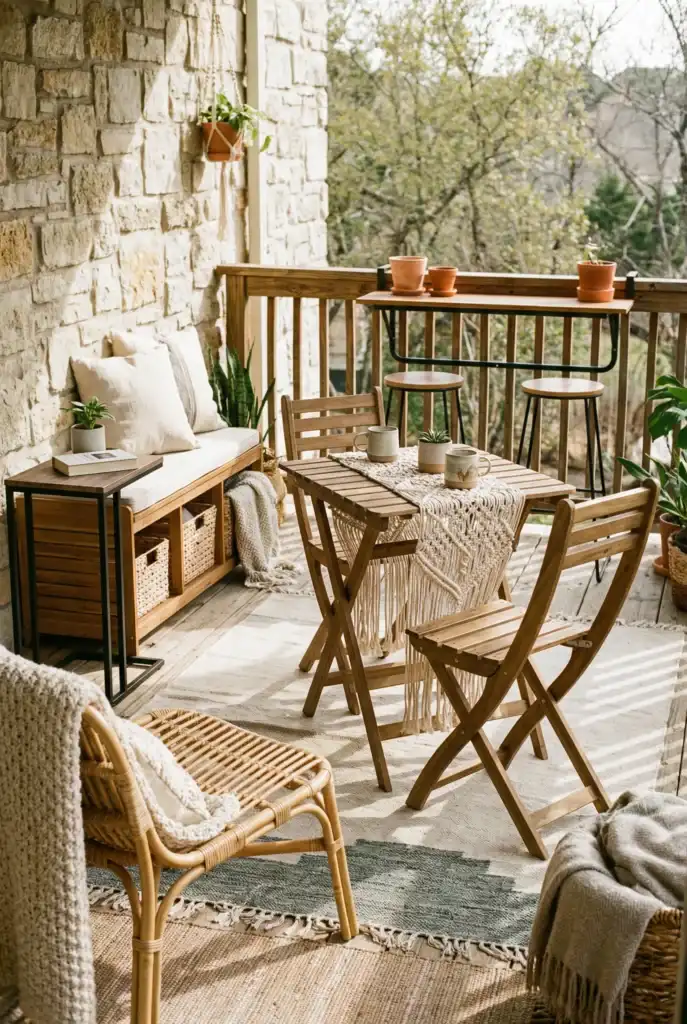
Consider flexible furniture that can serve different purposes and be moved when needed.
- Folding bistro set
- Stackable chairs
- Slim storage bench
- C-table that slides beneath seating
- Rail-mounted bar table
Always measure before buying. Deep lounge chairs may look comfortable, but they can quickly consume most of a narrow balcony.
Size Rules (So It Doesn’t Feel Crowded)
Start with door clearance and protect one clear walking path. Armless chairs, slim frames, and open legs usually work better than bulky furniture with heavy bases. Before purchasing anything large, use painter’s tape to mark its footprint on the floor and walk around it to make sure the layout still works.
Product Examples Grouped for Real Use
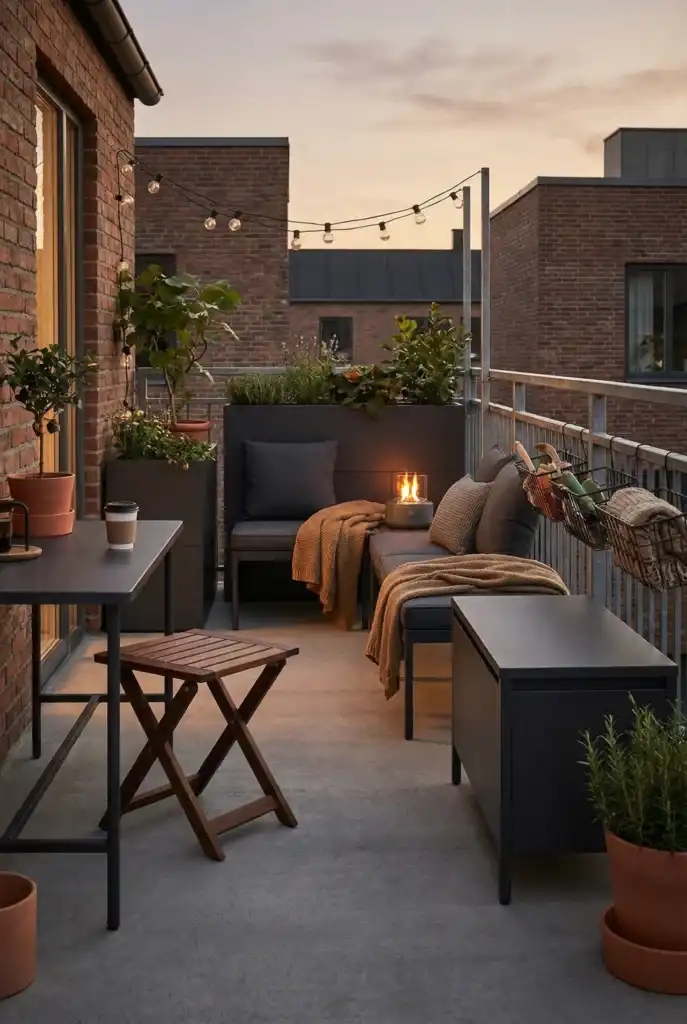
For an ultra-tight balcony, consider rail tables, folding stools, and slim side tables. For lounging, a narrow bench, folding chair, or compact floor cushion setup can add comfort without taking over the space. If storage is limited, use a small deck box, storage bench, or railing baskets for everyday outdoor items.
Quick win: Choose your main furniture piece first, place it, and only then decide what else the balcony actually needs.
Step 3: Add Balcony Flooring + a Rug Layer (Instant Cozy)
Flooring can instantly make a balcony feel more like a real outdoor room. You do not need a permanent renovation; a simple rug, runner, or removable deck tile can define the space and soften hard surfaces. For renters, removable flooring options are often the easiest choice.
Interlocking deck tiles can create a finished appearance while remaining relatively easy to install and remove. Outdoor rugs are another simple option, but make sure they can dry properly after rain. Moisture trapped underneath can lead to unpleasant odors or damage over time.
Balcony Flooring Options (Renter-Safe)
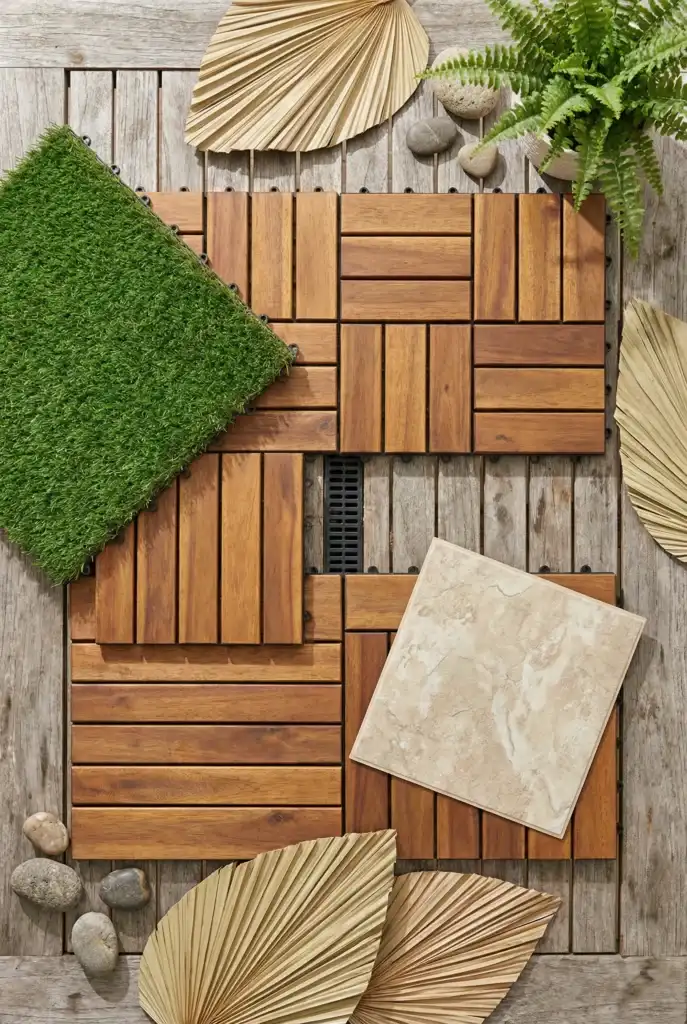
- Interlocking wood or composite deck tiles
- Outdoor turf tiles where drainage allows
- Removable outdoor flooring where permitted
Outdoor Rugs on a Balcony (Yes/No + How)
Yes, an outdoor rug can work beautifully on a balcony. Choose one designed for outdoor conditions and allow air to circulate underneath it. Lift the rug occasionally, especially after rain, so the surface underneath can dry properly.
For inspiration and searches, use the phrase outdoor rugs balcony. Even a simple runner can make the space feel warmer and more finished.
Quick win: Add one floor layer, even if it is just a small outdoor runner.
Step 4: Go Vertical with Plants (No Floor Space Needed)
Plants bring life and personality to a balcony, but too many floor pots can quickly make the area feel crowded. Instead, create a dedicated plant zone and use vertical space wherever possible. Hanging planters, railing boxes, hooks, and trellises can give you plenty of greenery without sacrificing valuable floor space.
Start with one area rather than scattering plants everywhere. Combine tall, medium, and trailing plants to create different height levels. If you rent, use removable hooks, clamps, or freestanding supports where building rules allow.
Hanging Options (Ceiling, Railing, Wall)
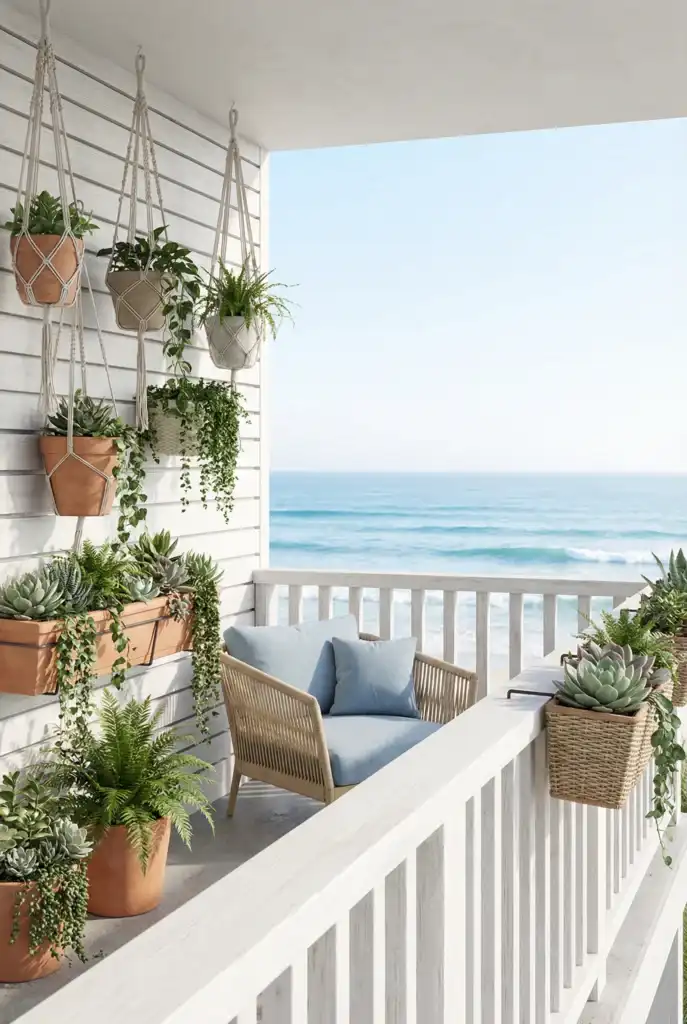
Hanging planters are excellent space savers, but they need to be securely attached. Wind can easily move lightweight baskets, so use sturdy hooks and suitable attachments for your balcony.
Railing planters, rail hooks, lightweight trellises, and freestanding plant supports can all help you build upward. Always check your building rules before attaching anything permanently.
Plant Picks by Sun Level
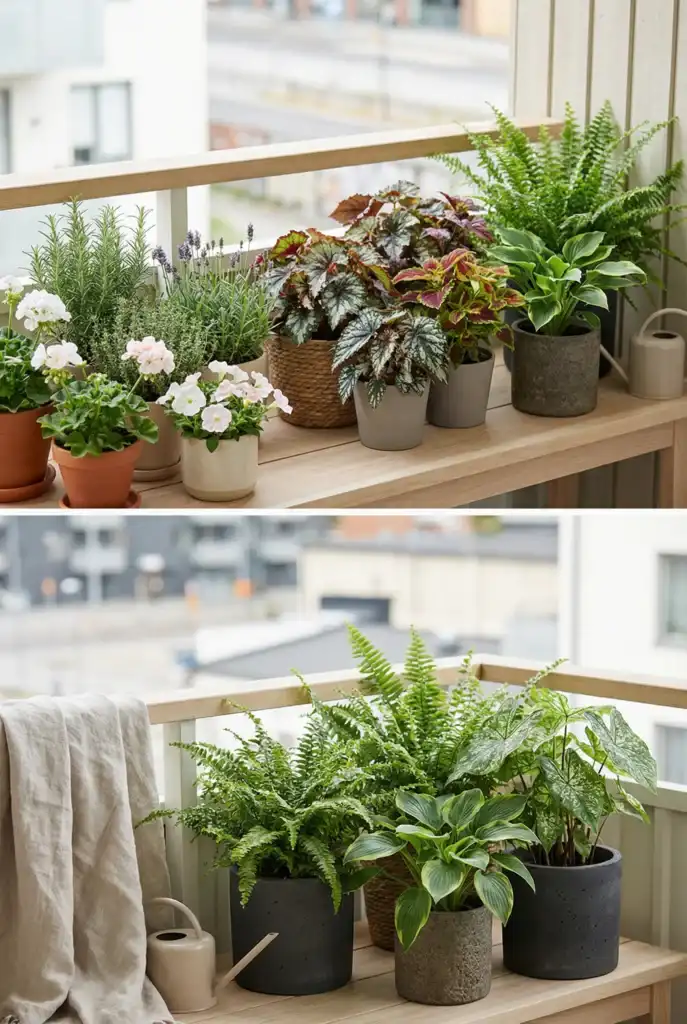
- Full sun: Herbs, geraniums, and hardy flowering plants
- Part shade: Begonias, coleus, and many trailing varieties
- Shade: Ferns and other low-light leafy plants
If your balcony receives little sunlight, choose shade-loving plants rather than trying to force sun-loving varieties to survive.
The Styling Formula (Rule of 3 + Height Layers)
Use three levels—tall, medium, and trailing—to create a balanced plant display. Grouping plants in small clusters usually looks more intentional than spreading individual pots across the entire balcony.
Quick win: Create one plant zone with three different heights before buying additional pots.
Step 5: Add Privacy Without Drilling (Screens + Greenery)
A little privacy can make a balcony feel much more comfortable and inviting. You do not always need to drill into walls to create it. Depending on your building rules, railing screens, outdoor curtains, trellises, and plants can provide coverage while adding style.
Start with the side that feels most exposed and add greenery as a softer second layer. Combining a privacy screen with plants can make the space feel cozy instead of closed off.
Screen Options That Stay Put
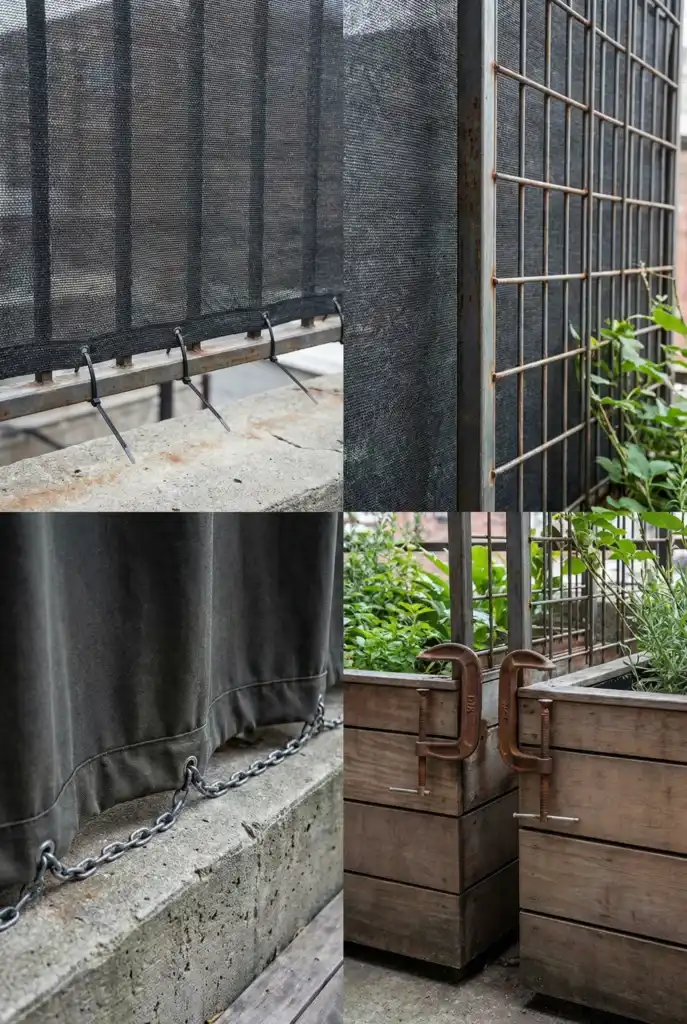
Bamboo or reed screens can work well when securely attached at several points. Outdoor curtains can add softness but should be properly secured, especially in windy areas. Trellis panels with climbing plants or planters can also combine privacy and greenery.
Quick win: Cover the most exposed side first and see whether you actually need additional screening.
Shade and Weather Solutions
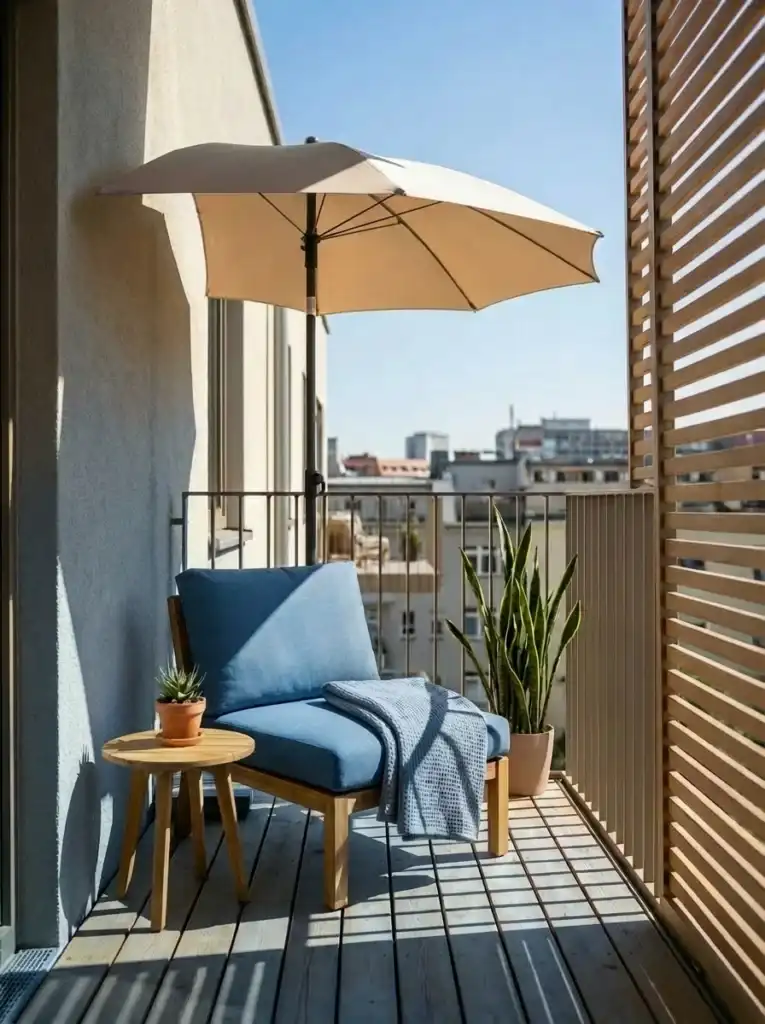
Shade can make the difference between a balcony that looks good and one you actually enjoy using. If your space receives strong sunlight, a compact shade solution can make seating much more comfortable. Half parasols are particularly useful for narrow balconies because they can sit closer to a wall.
For balconies with more space, a side parasol may provide shade without placing a pole in the center of the seating area. Smaller shade sails or awning-style solutions may also work, depending on your building rules and the available attachment points.
Shade options to shop similar for:
- Half parasol for wall-side shade
- Compact side parasol with a stable base
- Small shade sail where permitted
Weather backup plan
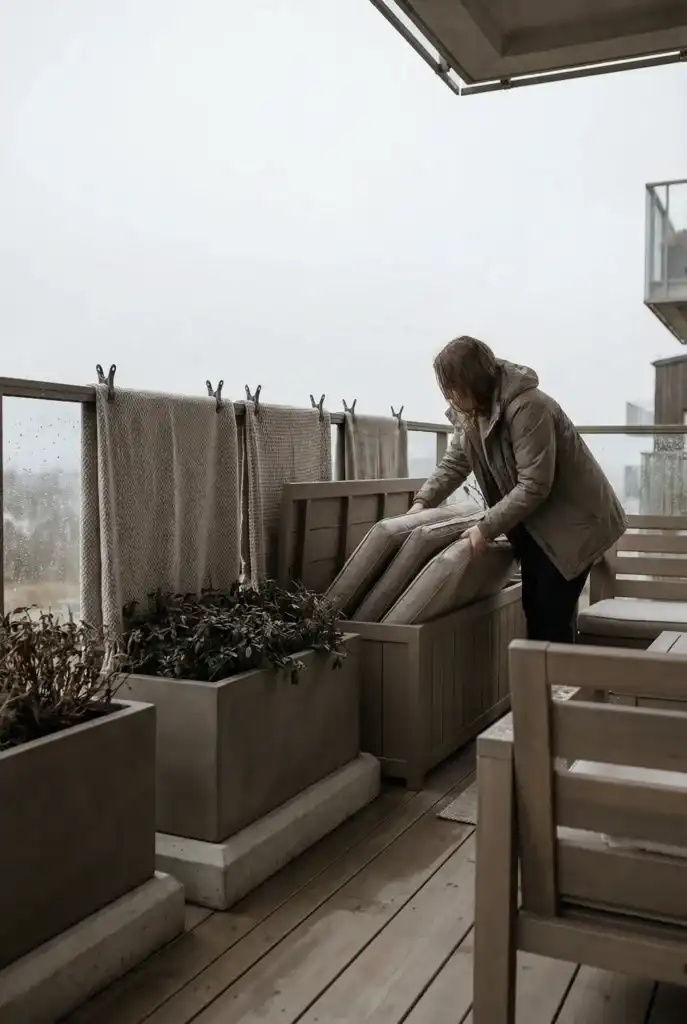
Prepare for wind and rain before they become a problem. Keep cushions and textiles in a storage box, secure lightweight decor, and choose planters with stable or wide bases. Make sure rugs and flooring still allow water to drain properly.
Quick win: Create a simple system that lets you pack away cushions and textiles in about two minutes.
Step 6: Lighting for a Glowy Night Balcony (3-Layer Lighting)
Good lighting can turn a basic balcony into a cozy evening retreat. Instead of relying on one bright light, use several smaller sources to create a softer atmosphere. A combination of overhead or railing lights, a table lantern, and a small accent light near plants can make the space feel warm and inviting.
For renters, battery-powered and solar lights are convenient because they avoid complicated wiring. If you use plug-in lights, choose outdoor-rated products and keep cords and connections protected.
Use the search phrase string lights balcony when looking for inspiration.
The Glow Rule for Small Spaces
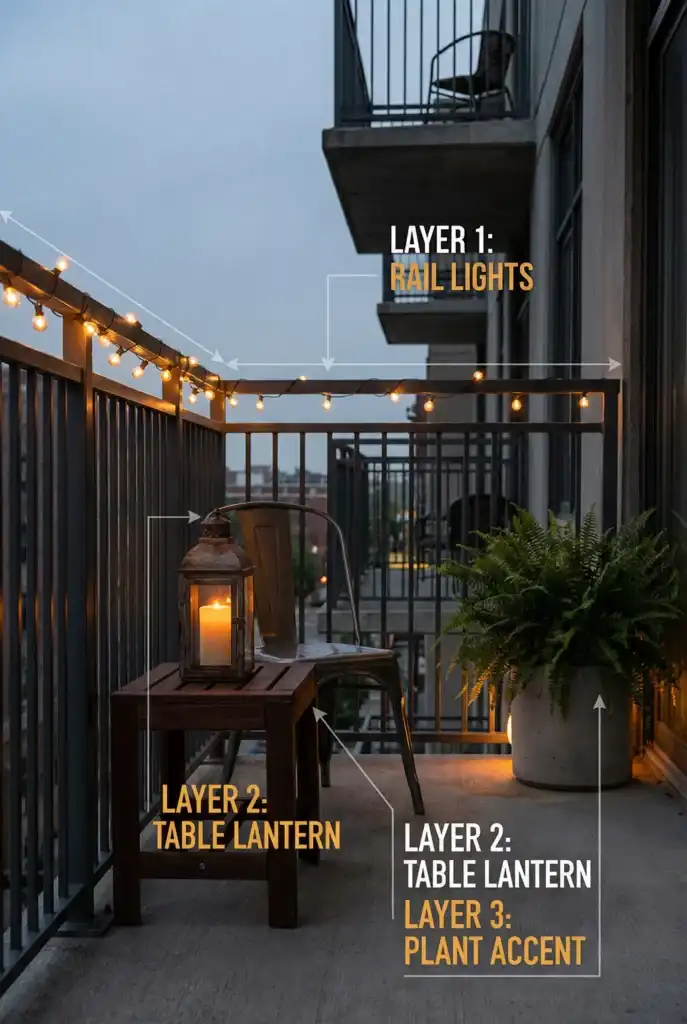
- Overhead or railing light
- Table-level lantern
- Accent light near plants or a corner
Quick win: Add one lantern and one strand of lights to create an instant evening glow.
Step 7: Style It Like a Tiny Outdoor Room (Color + Texture)
This is where the balcony begins to feel personal. Keep the styling simple by choosing one main palette and repeating an accent color a few times. Instead of adding lots of accessories, focus on texture through cushions, throws, rugs, plants, and one or two decorative pieces.
Choose colors that connect with your indoor space so the balcony feels like an extension of your home. For example, repeat one accent color through a cushion, planter, and lantern. A lightweight piece of balcony wall decor can also add personality without using floor space.
Three Easy Palettes
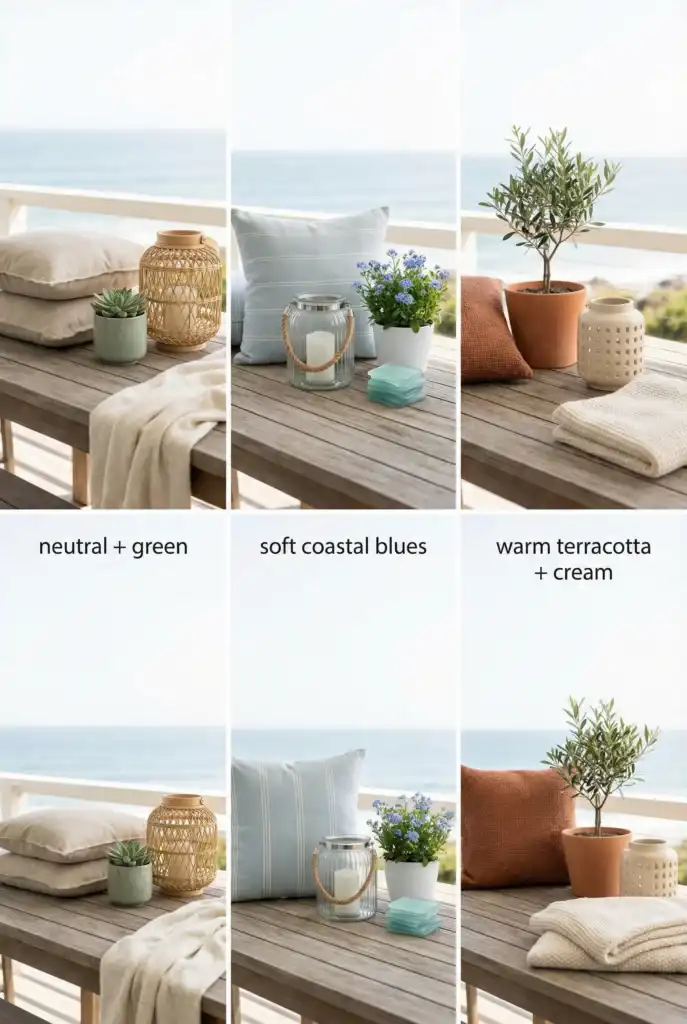
- Neutral plus green
- Soft coastal blues
- Warm terracotta plus cream
Accessories That Make the Biggest Impact
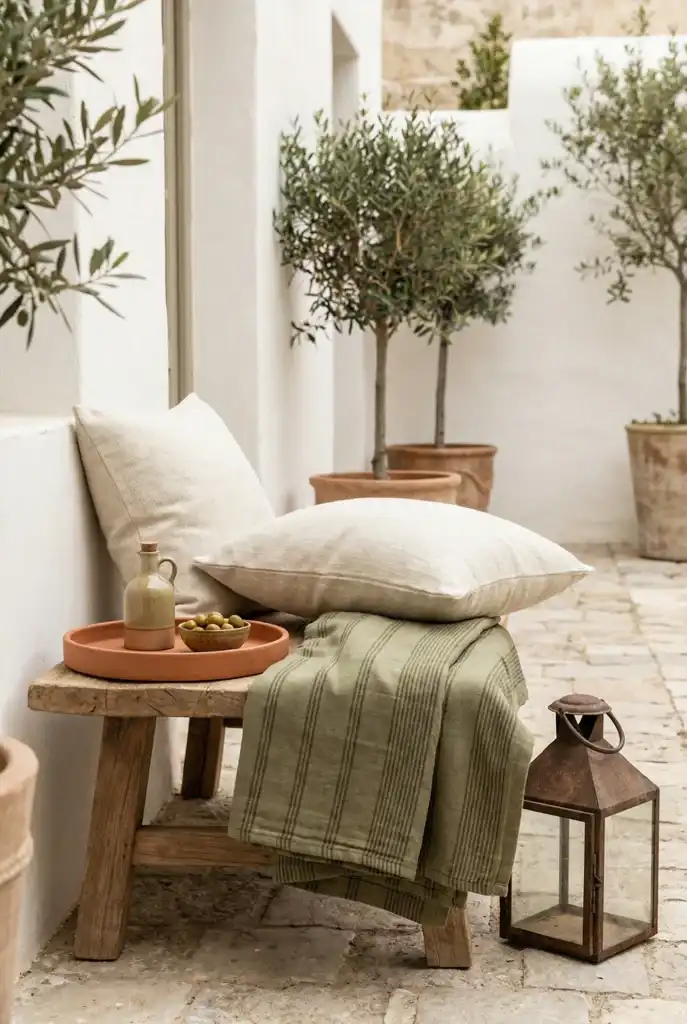
A few carefully chosen accessories can make a bigger difference than a collection of small decorations. Start with cushions, a throw, one tray, and a compact side table, then stop before the space becomes cluttered.
Quick win: Repeat one accent color three times and keep the remaining decor simple.
Step 8: Storage Solutions (So It Stays Cute)
Good storage keeps your balcony looking organized instead of turning it into a place for random household items. Whenever possible, choose one larger storage solution rather than filling the space with several small containers.
A deck box or storage bench can hide cushions, watering supplies, and outdoor accessories. For very narrow balconies, use vertical cabinets, under-seat bins, or railing baskets to make use of unused areas.
Use the search phrase balcony storage solutions when looking for ideas.
- Storage bench or deck box
- Vertical cabinet where space allows
- Under-seat storage bins
- Railing hooks for small tools
Quick win: Give every loose item a designated home, even if that home is just one storage bin.
Safety + Building Rules (Read Before You Hang Anything)
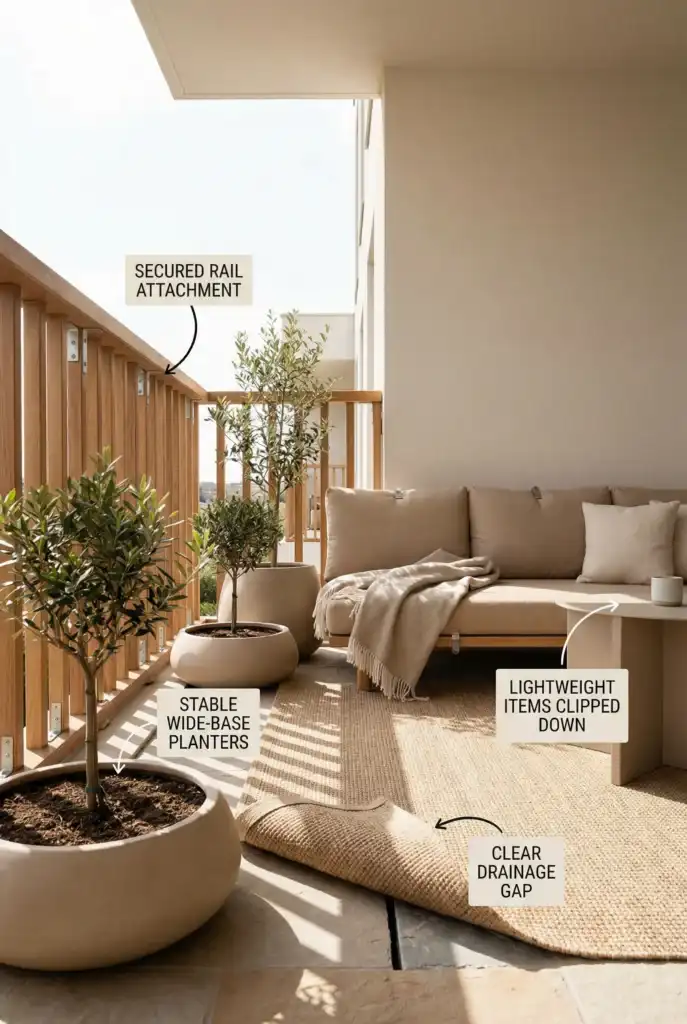
Balcony safety should always come before decorating. Secure lightweight items, avoid unstable or top-heavy planters, and be careful with anything attached to railings. Do not overload the railing or block drainage areas. Rugs and deck tiles should allow water to drain properly, while grills, heaters, flames, and permanent fixtures should only be used if your building and local rules allow them.
The Weekend Plan (So You Don’t Get Overwhelmed)
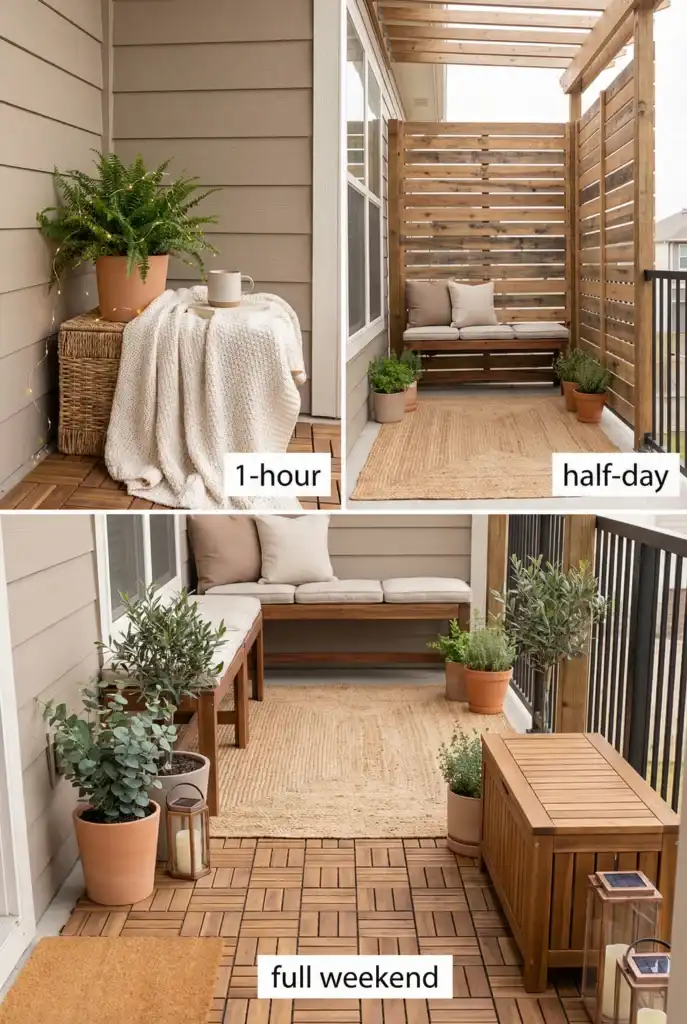
You do not have to transform the entire balcony in one day. Start with one finished area and build from there. A small amount of progress can make the whole space feel noticeably better.
1-hour quick win
Add lighting, one plant arrangement, and one textile. These three changes can quickly make the balcony feel warmer and more inviting.
Half-day upgrade
Add your main seating, define the floor with a rug or tiles, and create privacy on one exposed side. This gives you the biggest visual improvement without making the project complicated.
Full weekend makeover
Start with flooring, then add plants, lighting, and storage. Finishing with storage helps keep everything organized once the makeover is complete.
DIY Balcony Projects (Fast Weekend Upgrades)
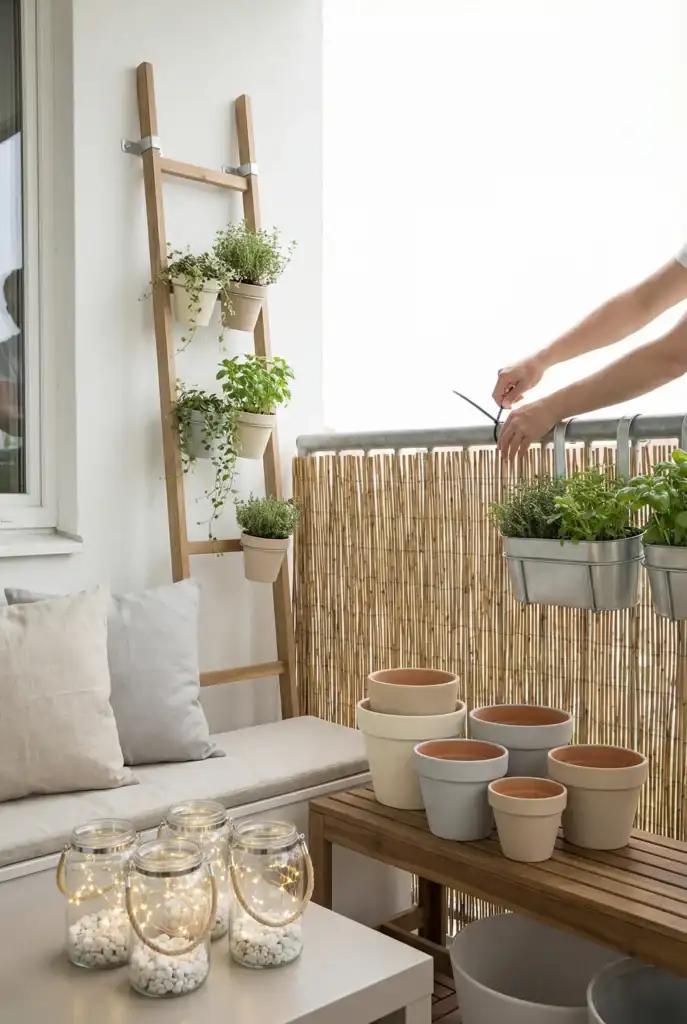
These DIY balcony projects are simple enough to complete over a weekend without turning the space into a major renovation.
DIY privacy screen: Secure a reed screen to the railing at several points and add appropriate weight or support at the bottom.
Painted pots: Paint three pots in the same color palette, seal them for outdoor use, and repeat the color through another accessory.
Leaning plant shelf: Use a small sealed wood shelf, position it against a wall, and secure it properly so it cannot tip.
Jar lantern cluster: Add pebbles for weight, place battery-powered tea lights inside, and group the jars together in one corner.
Simple cushion covers: Make envelope-style covers from suitable outdoor fabric and add ties to keep them secure.
Rail herb bar: Use small railing planters to create a compact herb garden without taking up floor space.
These projects can also work as simple balcony decor ideas because they add personality without making a small space feel crowded. If you want small balcony ideas that are realistic and easy to finish, these are a great place to start.
Small Balcony Mistakes to Avoid (So It Doesn’t Feel Cramped)
Avoid filling the balcony with too many small decorative items, choosing furniture that is too deep, or keeping everything on the floor. Skipping lighting can also make the space feel unfinished at night, while having no storage plan can quickly turn the balcony into a clutter zone. Stick with one clear layout, one hero furniture piece, open walking space, and defined storage areas to keep your small balcony comfortable and stylish.